Tag Archives: Casino Table

RFID Casino Table Tracking: How Real-Time Chip Monitoring Transforms Gaming Operations

The casino industry has always operated at the intersection of high stakes and high precision. Every chip on every table represents real monetary value, and the ability to track, monitor, and manage that value in real time is no longer a luxury—it is a fundamental operational requirement. Radio Frequency Identification (RFID) technology has emerged as the definitive solution for casino table tracking, delivering unprecedented visibility into chip movement, table performance, and overall gaming floor dynamics.

This article explores how RFID-enabled real-time chip monitoring transforms gaming operations, from the individual table level to enterprise-wide analytics, and why forward-thinking casino operators are adopting this technology at an accelerating pace.

The Core Problem: Blind Spots in Traditional Table Management

For decades, casino table management relied on manual processes that were inherently slow, error-prone, and limited in scope. Pit managers conducted periodic chip counts, supervisors logged transactions by hand, and floor-level analytics were assembled from disparate data sources that rarely aligned in real time. These traditional methods created significant operational blind spots:

Delayed reconciliation: Chip counts were performed at shift changes, meaning discrepancies could go undetected for hours, giving bad actors ample time to exploit gaps.
Inaccurate float tracking: Manual float sheets depended on human transcription, introducing errors that cascaded through accounting systems.
Limited table-level visibility: Without real-time data, management could not identify which tables were underperforming, which dealers had unusual variance patterns, or which game types attracted the most chip velocity.
Reactive rather than proactive oversight: Problems were discovered after they occurred, not as they were happening.

These blind spots carried direct financial consequences. Unexplained chip variances, slow dispute resolution, and inefficient float allocation all eroded profitability and compliance readiness.

How RFID Table Tracking Works

RFID casino table tracking operates through a layered system of hardware and software that integrates seamlessly into existing table game infrastructure.

Embedded RFID Tags in Chips

Each casino chip is manufactured with an embedded RFID microchip and antenna. The tag stores a unique identifier that corresponds to the chip’s denomination, color, series, and issuance batch. Modern RFID tags used in casino chips are passive—they do not require a battery and are activated only when they come within the read range of an external antenna. This ensures longevity and reliability across years of daily use.

Table-Embedded Antennas

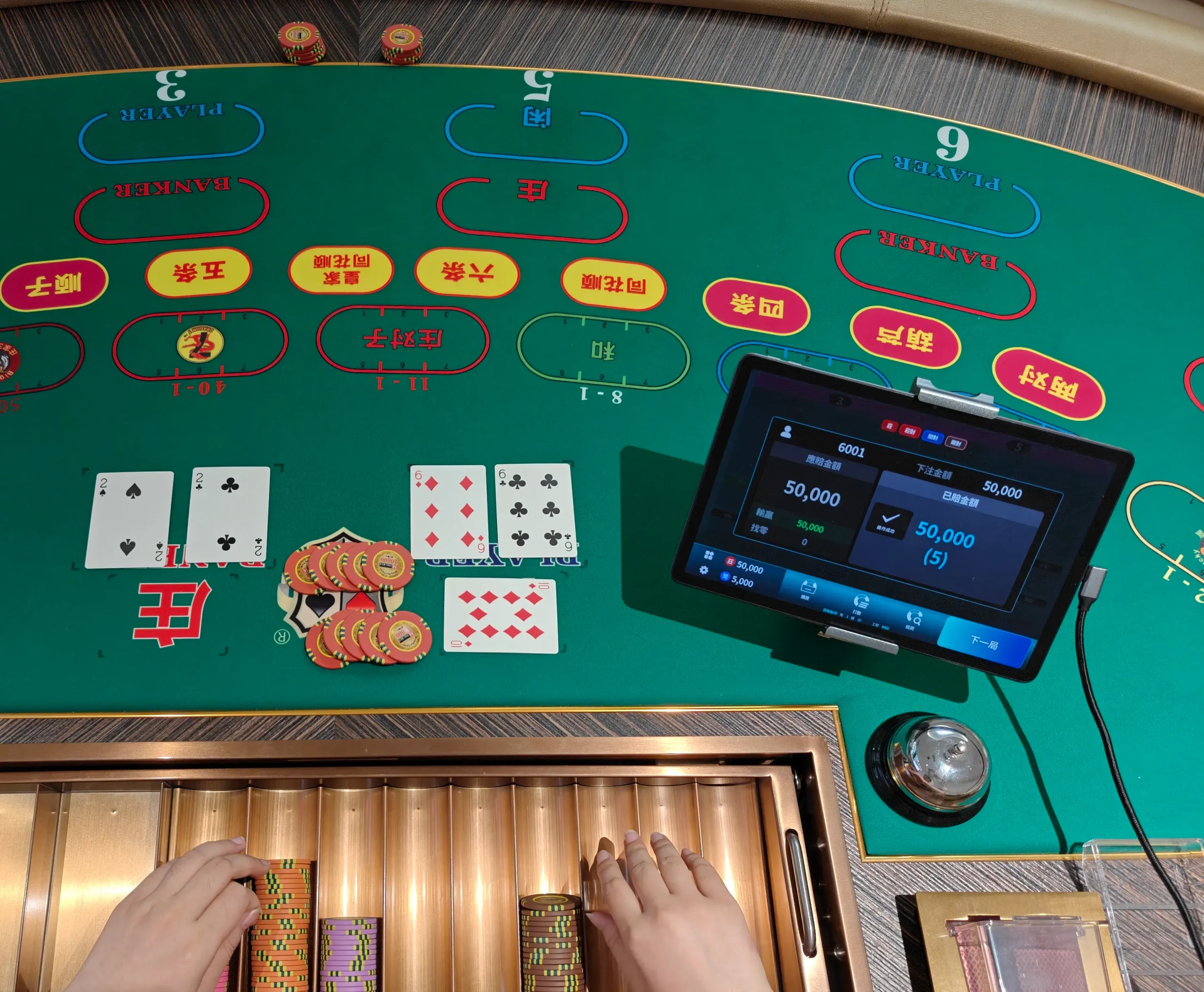
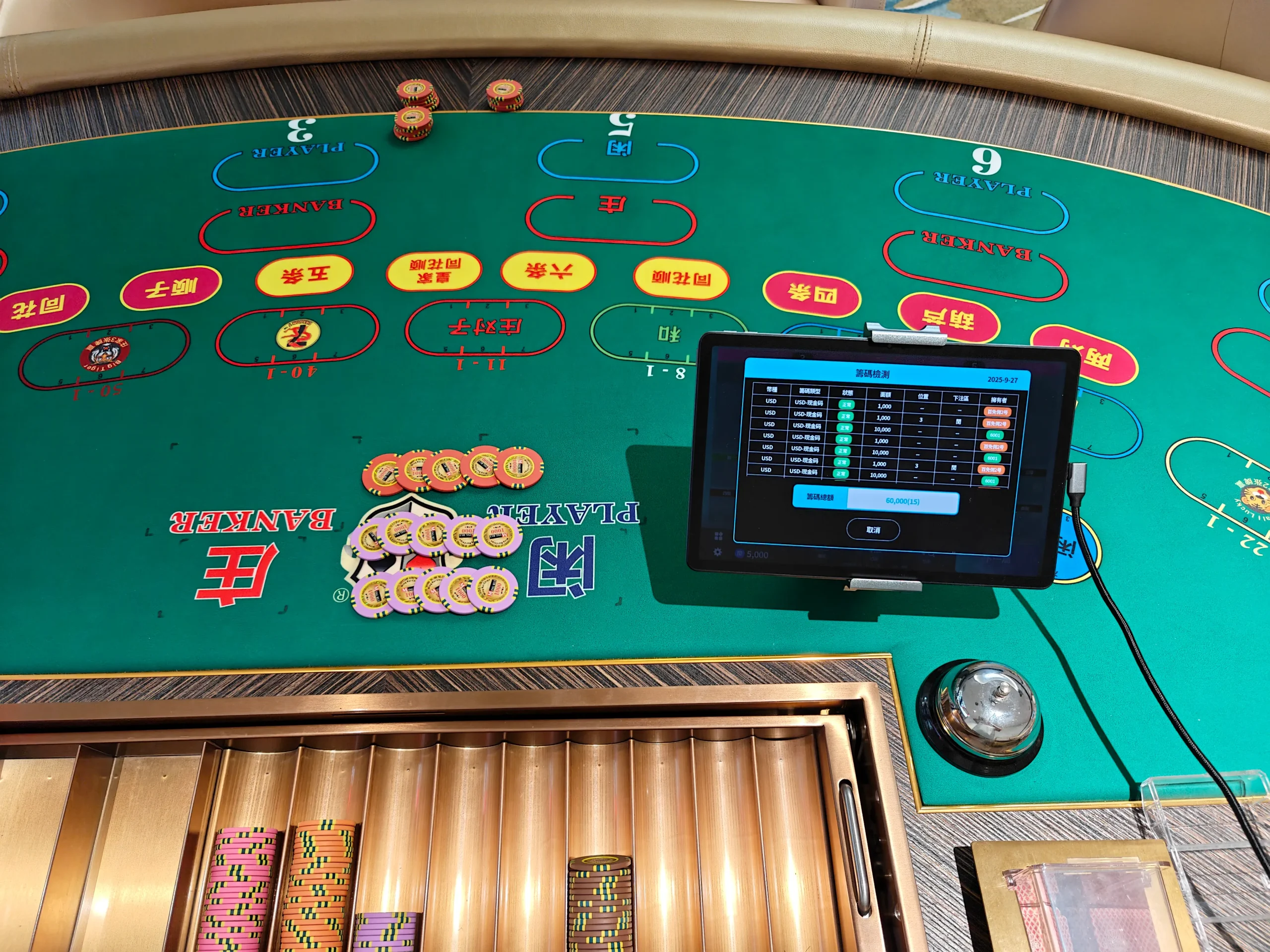
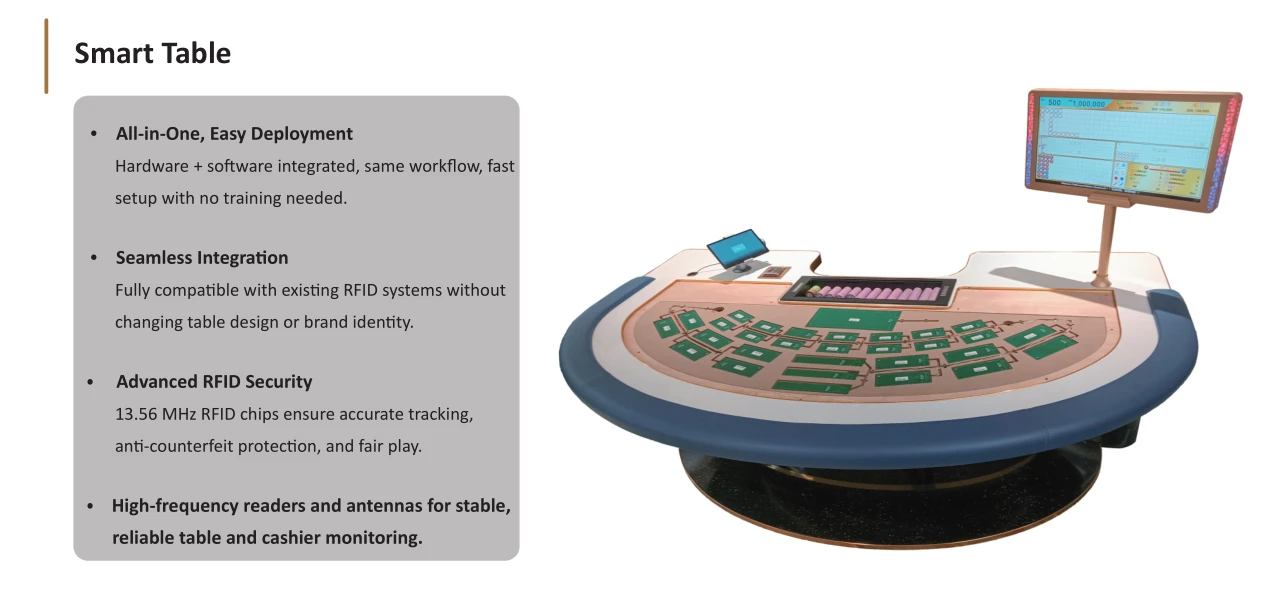
RFID reader antennas are installed beneath the felt surface of gaming tables. These antennas create a read zone that covers the entire playing area, including the dealer’s chip tray, the betting positions, and the cash drop zone. When chips are placed on the table—whether in the tray, on a betting spot, or stacked in front of a player—the antennas detect and identify each chip in real time.

Real-Time Data Processing

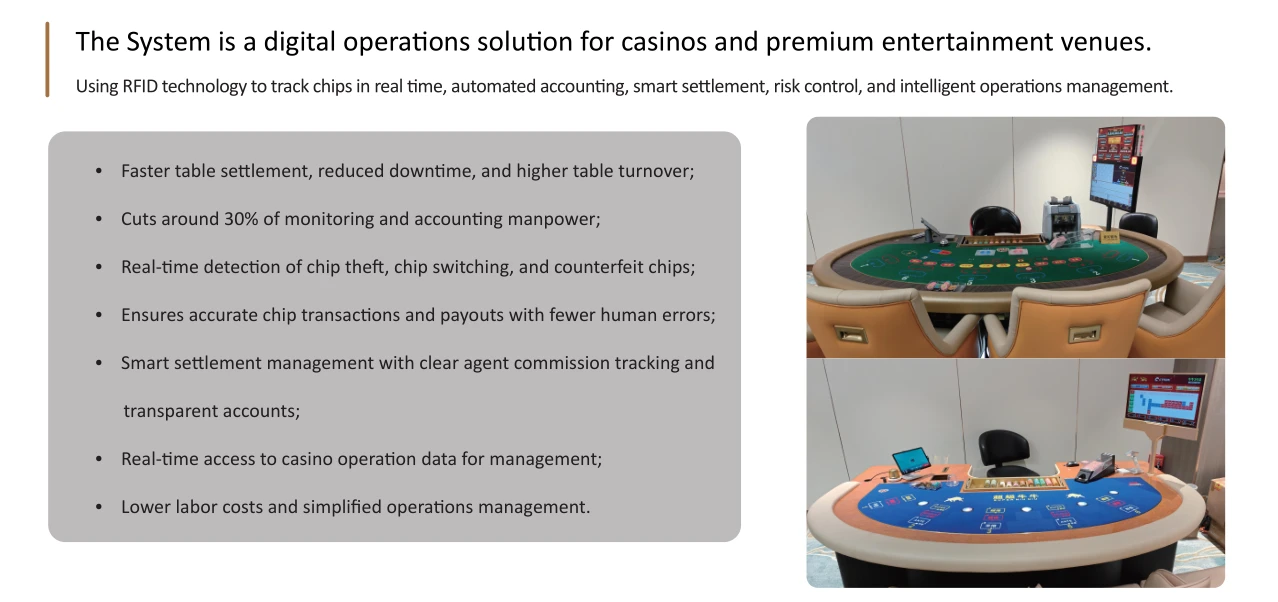
The antenna data feeds into a reader unit connected to the casino’s central monitoring system. Every chip movement on every tracked table is logged continuously: chips entering the dealer tray, chips wagered at each position, chips paid out as winnings, and chips removed from the table. This data stream enables live dashboards, automated alerts, and historical analytics without any manual intervention.

RFID Casino Table Tracking Real Time Chip Monitoring

Integration with Casino Management Systems

The RFID tracking layer integrates with existing casino management platforms, player tracking systems, and accounting databases. This means chip-level data enriches player behavior analytics, table performance metrics, and financial reconciliation workflows—all without requiring operators to maintain separate data silos.

Operational Benefits of Real-Time Chip Monitoring

The transformation from periodic manual tracking to continuous RFID-based monitoring delivers benefits across every dimension of table game operations.

Continuous Float Verification

With RFID table tracking, the chip float on every table is verified continuously—not just at shift boundaries. The system knows exactly how many chips of each denomination should be present at any given moment, and any discrepancy triggers an immediate alert. This eliminates the window of vulnerability that manual processes left open and reduces variance investigation from a hours-long exercise to a seconds-level response.

Live Table Performance Analytics

Real-time chip monitoring enables a new category of table performance metrics that were previously impossible to calculate with any accuracy:

Chip velocity per table: How quickly chips move through a given table, indicating game pace and player engagement levels.
Denomination distribution trends: Which chip values are most active at specific tables, informing float optimization decisions.
Hold percentage by position: Actual hold rates calculated from real chip movement data rather than estimated from hand counts.
Peak activity windows: Precise identification of when each table reaches its highest chip volume, enabling optimal staffing allocation.

These metrics allow operations managers to make data-driven decisions about table layout, float sizing, game mix, and staffing—decisions that directly impact revenue per table and per square foot of gaming floor space.

Enhanced Dealer Accountability

RFID table tracking introduces a layer of objective, automated oversight into dealer operations. The system records every chip transaction tied to a specific dealer and timestamp. This data supports:

Variance pattern analysis: Identifying dealers whose tables consistently show unusual chip movements, enabling targeted training or investigation.
Transaction accuracy verification: Confirming that payouts match wager outcomes without requiring a supervisor to physically observe every hand.
Performance benchmarking: Comparing dealer speed, accuracy, and table hold rates against objective standards derived from real data.

This does not replace human supervision—it augments it. Pit managers and supervisors can focus on customer service and game protection while the RFID system handles the data collection that previously consumed their time.

Rapid Dispute Resolution

Player disputes over chip counts, bet amounts, or payout accuracy are among the most time-consuming incidents on a gaming floor. RFID table tracking resolves many of these disputes instantly. When a player claims they wagered a different amount or received an incorrect payout, the system can retrieve the exact chip transaction log for that table, position, and time window. The data is objective, timestamped, and tamper-resistant—providing an authoritative record that both the player and the operator can trust.

Float Optimization Across the Floor

One of the most impactful operational benefits is the ability to optimize chip float distribution dynamically. Traditional float management relied on experience and rough estimates—placing a certain number of chips on each table based on historical patterns and supervisor judgment. RFID tracking replaces this with data-driven float allocation:

– Tables with high chip velocity receive appropriately sized floats to avoid interruptions for chip fills.
– Tables with low activity receive reduced floats, freeing chip inventory for higher-demand positions.
– Denomination mix is adjusted based on actual usage patterns rather than assumptions.

Optimized float distribution reduces the frequency of chip fills and credits, minimizes the labor cost of float transfers, and ensures that every table is always ready to accept wagers at the level its players demand.

RFID Casino Table Tracking Real Time Chip Monitoring

Compliance and Regulatory Advantages

Regulatory bodies across major gaming jurisdictions increasingly expect—or require—operators to demonstrate robust chip accountability. RFID table tracking directly addresses several regulatory priorities:

Audit Trail Integrity

Every chip movement on every tracked table is logged with a timestamp, reader ID, and chip identifier. This creates an unbroken, machine-generated audit trail that satisfies regulatory requirements for transaction documentation far more comprehensively than manual logs.

Variance Reporting Accuracy

Regulators require timely variance reports, and RFID systems generate these automatically. Discrepancies are flagged and documented at the moment they occur, not at the end of a shift when context has faded and evidence has degraded.

Anti-Money Laundering Support

RFID chip-level data supports suspicious activity detection by tracking chip movements that deviate from normal patterns—such as unusually large chip accumulations at a single position, rapid movement of high-denomination chips between tables, or chip volume patterns inconsistent with observed wagering behavior.

Regulatory Examination Readiness

When regulators conduct examinations, RFID-enabled operators can produce detailed, system-generated reports covering any table, any time period, and any chip denomination within minutes. This contrasts sharply with the labor-intensive, error-prone manual report compilation that examiners often encounter.

Implementation Considerations

Adopting RFID table tracking requires thoughtful planning across several dimensions.

Hardware Selection

Casino operators must select RFID tags and readers that meet the specific demands of gaming environments—durability under constant handling, reliable read performance through stacked chips, and compatibility with existing chip designs. Working with a leading provider of casino-grade RFID solutions ensures that hardware specifications align with operational requirements.

Table Retrofit vs. New Build

RFID antennas can be retrofitted into existing tables or integrated during new table construction. Retrofitting is typically more cost-effective for properties with established table inventory, while new builds allow for optimized antenna placement and reduced installation complexity.

Data Integration Architecture

The RFID data layer must be integrated with the property’s casino management system, player tracking platform, and financial accounting infrastructure. This integration should be designed with scalability in mind—adding new tables, new denominations, or new data consumers should not require architectural rework.

Staff Training and Change Management

Transitioning from manual tracking to RFID-based monitoring changes daily workflows for pit managers, supervisors, dealers, and accounting staff. Effective implementation includes structured training programs that help staff understand what the system does, how to interpret its outputs, and how to incorporate real-time data into their decision-making processes.

Privacy and Data Governance

RFID tracking generates granular data about player behavior and chip movement. Operators must establish clear data governance policies governing data retention, access controls, and usage boundaries—both to protect player privacy and to maintain regulatory compliance.

The Future of RFID Table Tracking

The trajectory of RFID technology in casino operations points toward several emerging capabilities:

AI-driven anomaly detection: Machine learning models trained on chip movement data will identify suspicious patterns faster and more accurately than threshold-based alerts.
Cross-table player tracking: Linking chip movements across multiple tables to build comprehensive player behavior profiles without requiring manual carding.
Predictive float management: Algorithms that anticipate float requirements based on historical patterns, seasonal trends, and real-time floor activity.
Integrated security ecosystems: Combining RFID chip data with surveillance video analytics, access control logs, and employee tracking to create unified security intelligence platforms.

Operators who establish RFID infrastructure today are building the foundation for these future capabilities. The data pipeline that real-time chip monitoring creates is the same pipeline that next-generation analytics and AI systems will consume.

Conclusion

RFID casino table tracking has moved beyond pilot programs and early adopters into mainstream operational technology. The benefits—continuous float verification, live table analytics, enhanced dealer accountability, rapid dispute resolution, optimized float distribution, and regulatory compliance readiness—are compelling and quantifiable. For operators evaluating their next technology investment, RFID table tracking represents not merely an upgrade to existing processes but a fundamental transformation of how table game operations are monitored, managed, and optimized.

FAQ

How does RFID table tracking differ from manual chip counting?

Manual chip counting occurs at discrete intervals—typically at shift changes—and depends on human observation and transcription. RFID table tracking operates continuously, detecting and logging every chip on the table in real time without manual intervention. This eliminates counting errors, reduces variance detection time from hours to seconds, and provides live data for operational decision-making.

Can RFID read through stacked chips on a table?

Modern casino-grade RFID readers are designed to read through stacks of chips. The antennas embedded in table surfaces detect individual chip tags even when chips are stacked in the dealer tray or in player positions. Leading providers have refined antenna geometry and read algorithms specifically to handle the stacking patterns common in live table game environments Macaumr Gaming Technology.

Does RFID table tracking slow down game pace?

No. RFID tags in chips are passive and require no action from dealers or players. The antennas beneath the table felt read chips silently and continuously without any change to game procedures, dealer routines, or player experience. The tracking layer operates invisibly alongside normal game play.

What happens if a chip’s RFID tag stops working?

RFID systems include exception-handling protocols for unreadable chips. When a chip fails to register, the system flags the anomaly and prompts a manual verification step. Most leading systems also support periodic tag health checks, allowing operators to identify and replace degraded chips before they cause tracking gaps.

Is RFID table tracking required by gaming regulators?

Regulatory requirements vary by jurisdiction. Some regulators mandate chip tracking technology for specific operations or chip denominations, while others encourage adoption through compliance incentives. Regardless of mandate status, RFID tracking significantly simplifies regulatory reporting and examination preparation, making it a strategic investment even in jurisdictions where it is not yet required.

How long does it take to implement RFID table tracking across a casino floor?

Implementation timelines depend on the scope of deployment, the condition of existing tables, and the complexity of data integration. A phased rollout—starting with high-value tables and expanding progressively—is typically completed over several months. Leading providers offer implementation support that includes hardware installation, software configuration, integration testing, and staff training.

Can RFID table tracking integrate with existing casino management systems?

Yes. RFID tracking platforms are designed with open integration architectures that connect to standard casino management systems, player tracking databases, and accounting platforms. The integration delivers chip-level data to existing workflows without requiring operators to replace their core operational software.
Casino Chip Loss Prevention: How RFID Tables Reduce Shrinkage

Chip shrinkage — the difference between expected and actual chip inventory — represents one of the most significant controllable losses in casino operations. Industry estimates place annual chip shrinkage at 1-3% of total chip inventory value across the average casino, translating to losses of $50,000 to $500,000 per property annually depending on size and chip volume. Traditional loss prevention approaches rely on manual observation, periodic counts, and surveillance review, but these methods cannot prevent shrinkage in real time. RFID-equipped gaming tables address chip loss at its source, providing continuous monitoring, immediate detection, and actionable intelligence that dramatically reduce shrinkage across the casino floor.

Understanding Chip Shrinkage Sources

Chip shrinkage originates from several distinct sources, each presenting different prevention challenges:

**Unintentional chip loss** accounts for approximately 40% of total shrinkage. Chips fall off tables, become mixed into discarded chip stacks, or get swept into waste containers during table cleaning. These losses are typically small — one or two chips at a time — but accumulate significantly over months of operation.

Casino Chip Loss Prevention RFID Tables Reduce Shrinkage

**Dealer error** contributes another 30% of shrinkage. Dealers may miscount payouts, overlook chips during collection, or incorrectly record chip movements. Errors increase during busy periods, high-limit games, and shift changes when dealers are under time pressure.

**Internal theft** — including chip embezzlement by staff and player collusion with dealers — represents approximately 20% of total shrinkage. This category includes schemes such as “chipping” (secretly removing chips from play), “float” (passing chips between player and dealer without game action), and “short pays” (paying a player less than the correct amount and keeping the difference).

**External theft** — including counterfeit chips and player cheating — accounts for the remaining 10%. Counterfeit chips have become increasingly sophisticated, and even experienced cage staff can miss well-made fakes.

RFID tables address all four shrinkage sources simultaneously by creating a complete, real-time record of every chip movement on the gaming floor.

Real-Time Chip Monitoring

The most immediate benefit of RFID tables is real-time chip monitoring. Every chip that enters or leaves a betting zone is read, identified, and logged with a timestamp. When a chip moves from the table to the dealer’s tray, the system records the movement. When the dealer places chips in the drop box, the system records the movement again. The result is an unbroken chain of custody from the moment a chip enters play until it returns to the cage.

This monitoring prevents unintentional loss in several ways. First, the system immediately flags chips that disappear from expected zones. If a player’s chip stack drops below the expected count without a corresponding movement to another zone, an alert is generated. Second, the system’s data enables rapid recovery of accidentally lost chips. When a chip is discovered in a floor sweep or waste container, its last-known location and timestamp can be retrieved from the database, identifying how and when it was lost.

The monitoring also serves as a powerful deterrent. Dealers and players who know that every chip movement is recorded are significantly less likely to attempt theft or manipulation. Surveillance teams can access RFID data in real time, comparing it against video feeds to verify that chip movements match the game action.

Payout Accuracy and Dealer Error Reduction

Dealer error in payouts is one of the largest single sources of chip shrinkage. On a fast-paced baccarat or Niu Niu table, a dealer may resolve 60-100 betting decisions per hour. Even with a 99% accuracy rate, 1-2 errors per hour accumulates to significant daily variance.

RFID tables eliminate dealer payout errors by providing real-time payout calculations. When a round resolves, the system calculates the exact payout based on the chips sensed in each betting zone and the game result entered by the dealer. The calculated payout displays on a dealer-facing screen, allowing the dealer to verify before distributing chips.

This approach catches two types of errors. Underpayment errors — where the dealer pays less than the correct amount — are identified immediately because the system displays the full calculated payout. Overpayment errors — where the dealer pays more than the correct amount — are caught because the system flags any chip movement that exceeds the calculated payout amount.

Casinos that have deployed RFID tables report 40-60% reductions in dealer payout errors, with the largest improvements occurring on high-limit tables where payout amounts are largest and the impact of errors is most significant.

Casino Chip Loss Prevention RFID Tables Reduce Shrinkage

Chip Float and Internal Theft Detection

Chip float schemes — where a dealer passes chips to a confederate player without a corresponding game action — are among the most difficult internal theft methods to detect through traditional surveillance. The chip float occurs in a fraction of a second, and the dealer and player coordinate their actions to avoid detection.

RFID tables detect float schemes through anomaly detection algorithms. The system monitors every chip movement and flags any transfer that does not correspond to a valid game action. If chips move from a player zone to the dealer tray but no betting decision is recorded for that player in the preceding round, the movement generates an immediate alert.

More sophisticated detection uses pattern analysis. The system builds behavioral profiles for each dealer and player, tracking metrics such as chip movement frequency, unusual timing patterns, and zone-to-zone transfers that deviate from normal game flow. When patterns suggest potential collusion, the system generates a priority alert for surveillance review.

The detection capabilities extend to short-pay schemes. In a short-pay scheme, a dealer pays a winning player correctly but records a smaller payout in the table’s chip movement log, keeping the difference. RFID tables eliminate this scheme because the system records the exact chips distributed to each player, preventing the dealer from falsifying the payout record.

Counterfeit Chip Detection

Counterfeit chips represent a growing threat to casino revenue. Modern counterfeiting techniques can produce chips that are virtually indistinguishable from authentic casino chips to the naked eye, and even experienced cage staff can be deceived. A single counterfeit chip exchanged for cash at the cage can represent a $100 or $500 loss to the casino.

RFID provides a first line of defense against counterfeits. Every chip issued by a casino carries a unique RFID tag with encoded data that cannot be replicated without access to the casino’s tag encoding system. When a chip is read at the cage or table, the system verifies the tag against the database. Unrecognized tags — or tags with encoding patterns that do not match the casino’s configuration — generate immediate alerts.

The verification happens at multiple points. At the cage window, incoming chips are verified against the database before exchange. At the table, chips entering play are verified before being placed in active zones. The multi-point verification ensures that counterfeits are caught before they can be converted to cash.

Advanced systems use cryptographic authentication in the RFID tags. Tags encoded with encrypted identifiers can be verified through a challenge-response protocol that proves the tag is authentic without revealing the encryption key. This prevents even sophisticated attackers from cloning tags by capturing and replaying the tag data Macaumr Gaming Technology.

Shrinkage Analytics and Prevention Programs

Beyond real-time detection, RFID chip tracking data enables shrinkage analytics that identify patterns, trends, and systemic issues. The system can generate reports on:

– **Table-level shrinkage rates:** Identifying tables with consistently high variance for investigation.
– **Shift-level patterns:** Detecting whether shrinkage is concentrated at specific shift times, suggesting specific staff or player patterns.
– **Denomination analysis:** Determining whether shrinkage is concentrated in specific denominations, indicating targeted theft or handling issues.
– **Variance trending:** Tracking shrinkage over time to measure the effectiveness of loss prevention initiatives.

These analytics transform loss prevention from a reactive function — responding to discovered incidents — into a proactive program that identifies and addresses systemic vulnerabilities before they result in significant losses.

Return on Investment for Chip Loss Prevention

The ROI case for RFID loss prevention is compelling. A property with $10 million in active chip inventory experiencing 2% annual shrinkage loses $200,000 per year to chip loss. Even a 50% reduction in shrinkage — achievable through RFID deployment on high-limit and high-traffic tables — saves $100,000 annually. For larger properties with higher chip volumes, the savings scale proportionally.

The investment in RFID tables includes hardware (antenna arrays, sensor boards, readers at each table), software (inventory and analytics platforms), and staff training. For a 50-table property, total deployment costs typically range from $1.5 million to $2.5 million, with annual maintenance and support adding $150,000 to $250,000. At a 50% shrinkage reduction rate, the payback period is 18-24 months, with ongoing annual savings that significantly exceed ongoing costs.

Frequently Asked Questions

How quickly can RFID tables detect chip loss compared to traditional methods?

RFID tables detect chip loss in real time — within seconds of the loss occurring. Traditional methods typically discover chip loss during periodic counts, which may occur daily, weekly, or monthly depending on the casino’s procedures. By the time a traditional count reveals a variance, the chips are long gone and the opportunity for immediate recovery has passed. RFID detection enables immediate response, including locking down tables and interviewing staff before the chips leave the property.

Can RFID systems distinguish between chips that are lost versus stolen?

The system records the exact chain of custody for every chip. If a chip moves to an unauthorized location — such as an exit or an employee’s personal bag — the system logs the movement and generates an alert. This enables security teams to respond immediately. For chips that are simply lost (dropped on the floor, swept into waste), the system provides last-known location data that can support recovery. The distinction between loss and theft is determined by the movement pattern, not by the system itself.

Does RFID eliminate the need for physical chip counts?

Physical counts remain a compliance requirement in most jurisdictions, but RFID technology transforms how they are conducted. The RFID system provides a continuous count that can be verified against the physical count. Discrepancies between the RFID count and the physical count indicate either RFID system issues (which can be diagnosed and corrected) or physical count errors. Over time, casinos report that the need for full physical counts diminishes as RFID data provides continuous confidence in inventory accuracy.

What is the typical shrinkage reduction achieved after deploying RFID tables?

Casinos deploying RFID tables report shrinkage reductions of 40-70%, with the variation depending on the property’s prior shrinkage levels, the scope of deployment (high-limit only vs. full floor), and the maturity of the analytics program. Properties with higher prior shrinkage see larger initial reductions. As the analytics program matures and loss prevention processes are refined, shrinkage rates typically stabilize at 60-80% below pre-deployment levels.

Can RFID systems prevent chip loss from player cheating, such as edge sorting or past posting?

RFID systems address chip-related cheating but not all forms of player advantage play. Edge sorting (manipulating card orientation) and past posting (adding bets after outcomes are known) are card-handling issues that RFID does not directly address. However, RFID does prevent chip-related cheating such as surreptitious bet increases and chip stripping, which are often combined with other advantage play techniques. The comprehensive approach of RFID — combined with traditional surveillance and game protection — creates a defense-in-depth strategy.

RFID Casino Cage Management: Seamless Table-to-Cage Integration

The casino cage serves as the financial nerve center of every gaming operation. It processes player buy-ins, cashes out winnings, manages chip exchanges, and reconciles the daily flow of chips between the gaming floor and the count room. Traditional cage operations are heavily manual, requiring staff to physically count chips, record transactions by hand, and verify identities through visual inspection. RFID technology transforms cage management by automating these processes and creating a seamless, real-time connection between table-level chip tracking and cage-level financial processing.

The Current State of Cage Operations

A typical casino cage handles between 200 and 500 transactions per hour during peak periods. Each transaction involves counting chips (which takes 1-3 minutes for a standard buy-in), recording the transaction details, updating the cage’s inventory records, and processing the corresponding cash movement. At peak volume, cage staff are processing transactions as fast as they can, and any delay creates a queue that frustrates players and reduces floor throughput.

The manual nature of cage operations creates several pain points:

RFID Casino Cage Management Seamless Table Cage Integration

**Counting errors.** Fatigue, distraction, and time pressure lead to counting errors that cascade through the reconciliation process. A single miscounted $100 chip can trigger a 30-minute variance investigation.

**Transaction bottlenecks.** During peak hours — especially around tournament breaks, fight nights, and holiday weekends — cage windows can develop 15-20 minute queues. Players waiting in line are not on the floor generating revenue.

**Inventory blind spots.** The cage’s chip inventory is updated only when transactions are recorded. Between transactions, the cage staff does not have a real-time view of current holdings.

**Verification delays.** Checking whether a chip is authentic, belongs to the casino, and is in active circulation requires manual reference to printed or electronic chip logs RFID Gaming Table.

RFID addresses each of these pain points through automation and real-time data integration.

RFID-Enabled Cage Windows

The core of RFID cage management is the RFID-enabled cage window. Each window is equipped with a reader array that can process chips in bulk — reading an entire stack of 50 chips in under 2 seconds. The reader identifies each chip’s denomination, unique serial number, and casino identifier, providing an instant, accurate count that eliminates manual counting entirely.

The cage window workflow changes dramatically with RFID:

**Buy-in processing.** The player presents cash at the window. The cage staff enters the buy-in amount into the system. The system calculates the optimal chip mix for the buy-in (based on the table the player intends to play and the available cage inventory) and presents the recommended denominations. The staff retrieves the chips from RFID-enabled drawers that automatically track which chips are being issued. The entire transaction is completed in under 30 seconds, compared to 2-3 minutes for manual processing.

**Cash-out processing.** The player presents chips at the window. The RFID reader reads the entire stack instantly, confirming the total value and verifying each chip’s authenticity and active status. If any chip is flagged — counterfeit, from another casino, or previously reported stolen — the system generates an alert and the transaction is paused for verification. For valid chips, the cash amount is calculated automatically and the transaction is processed.

RFID Casino Cage Management Seamless Table Cage Integration

**Chip exchange.** The player requests an exchange (e.g., trading $5 chips for $100 chips). The RFID reader reads the incoming chips, the system verifies them, calculates the equivalent value, and the staff issues the requested denominations from RFID-enabled drawers. Both sides of the transaction are logged simultaneously.

Table-to-Cage Data Flow

The transformative aspect of RFID cage management is not the window-level automation but the seamless data flow between the gaming floor and the cage. Every chip movement at every RFID-equipped table is transmitted to the central management system, which the cage accesses in real time.

This data flow enables several capabilities that were previously impossible:

**Pre-arrival preparation.** When a player at a high-limit table requests a fill (additional chips delivered to the table from the cage), the table’s RFID system transmits the fill request with the exact denominations needed. The cage staff can prepare the fill before the runner arrives, reducing delivery time from 5-10 minutes to under 2 minutes. Faster fills mean less downtime at the table and more hands per hour.

**Automatic chip tracking.** When chips move from a table to the cage via a runner, the RFID system logs the transfer. The runner carries the chips in an RFID-enabled transport container that reads the chips during transit, creating a chain-of-custody record from table departure to cage arrival. The cage system matches the incoming chips against the transfer record, confirming that every chip accounted for at the table has arrived at the cage. Any discrepancy is flagged immediately.

**Real-time inventory management.** The cage’s chip inventory is updated continuously, not just when transactions are recorded. As chips leave the floor and enter the cage, the inventory automatically reflects the change. As chips leave the cage and return to the floor, the inventory adjusts accordingly. The cage manager can view the current inventory at any time, without waiting for a manual count Macaumr Casino Equipment.

RFID-Enabled Cash Drawers and Chip Storage

Modern RFID cage deployments include intelligent storage systems. Chip drawers in the cage are equipped with RFID readers that continuously monitor the contents of each drawer. When a staff member removes chips for a transaction, the system logs the removal. When chips are returned, the system logs the return.

This continuous monitoring eliminates the need for periodic drawer counts, which traditionally consume 30-45 minutes per shift per cage window. Instead, the system provides a live inventory count that can be verified at any time. The time savings alone — across a property with 8-12 cage windows — represents 8-12 hours of staff time per shift that can be redirected to customer service and higher-value activities.

The storage system also supports automated denomination management. When a drawer’s count of a specific denomination falls below a threshold, the system generates a replenishment request. When a drawer exceeds its capacity for a denomination, the system suggests a redistribution to other drawers or to the count room. This optimization reduces the frequency of denomination shortages that delay transactions and frustrate players.

Count Room Integration

The count room — where chips collected from table drop boxes are counted, verified, and reconciled — represents one of the most labor-intensive processes in casino operations. RFID integration transforms this process through automated counting and real-time reconciliation.

Traditional count room operations involve emptying drop boxes, sorting chips by denomination, counting each stack manually, and recording totals on paper logs. A single count room session for a 100-table property requires 4-6 hours and 8-12 staff members. RFID-enabled count rooms use automated chip counters that process 3,000-5,000 chips per minute, completing the count in under 90 minutes with 2-3 staff members.

The integration between table tracking and count room data creates an automated reconciliation process. The RFID system at each table logs every chip that enters the drop box. The count room system reads the same chips during the automated count. The two datasets are matched automatically, with discrepancies flagged for investigation. This eliminates the manual reconciliation process and reduces variance investigation time from hours to minutes.

Staff Optimization and Window Utilization

RFID cage management data enables optimization of cage staff deployment. Transaction volume data — collected by the RFID system for each window — reveals patterns that inform staffing decisions:

– Peak transaction periods (typically 6-8 PM and post-tournament breaks) can be identified precisely, allowing staff to be pre-positioned at high-volume windows.
– Low-volume windows can be identified and consolidated, reducing idle staff time.
– Transaction processing times can be tracked, identifying staff who need additional training or windows that need hardware maintenance.

The data also supports longer-term planning. Transaction volume trends over weeks and months inform decisions about cage expansion, window configuration, and staff hiring. When a property plans a major event — a poker tournament, a boxing match, a convention — the cage manager can use historical RFID data from similar events to predict transaction volumes and schedule staff accordingly.

Security and Audit Trail

RFID cage management provides a comprehensive audit trail that satisfies regulatory requirements and supports loss prevention investigations. Every transaction at every cage window is recorded with:

– Timestamp
– Staff member ID (captured from the staff login at the window terminal)
– Player ID (if the player is rated and identified)
– Chip IDs and denominations involved
– Transaction type (buy-in, cash-out, exchange, fill, credit)
– Verification status (all chips verified, flagged chips identified and disposition recorded)

This audit trail is available in real time for regulatory inspection and can be exported in standard formats for compliance reporting. When investigations reveal discrepancies between floor and cage records, the audit trail provides the data needed to trace the discrepancy to its source.

Frequently Asked Questions

How does the RFID system handle large cash-out transactions where a player brings thousands of chips to the cage?

The RFID reader array at the cage window can process up to 500 chips simultaneously in under 3 seconds. For larger transactions, the chips can be processed in batches, with each batch read and verified before the next. The system aggregates the total across all batches, providing a final count and verification in under 30 seconds regardless of transaction size. This is dramatically faster than manual counting, which can take 10-15 minutes for a large cash-out.

What happens if the cage RFID reader detects a chip that does not belong to the casino?

The system immediately pauses the transaction and generates an alert. The chip is flagged in the database as “foreign” — meaning it carries an RFID tag that does not match the casino’s configured tag parameters. The cage staff is prompted to examine the chip physically and determine its origin. Common scenarios include chips from affiliated properties (which may be exchangeable under inter-property agreements) and counterfeit chips (which are confiscated and reported to security). The system logs the disposition of every flagged chip, maintaining a complete record for compliance and investigation purposes.

Can RFID cage systems integrate with existing cage management software?

Most RFID cage systems provide REST APIs and SDKs that enable integration with existing cage management software, accounting systems, and regulatory reporting platforms. The integration typically requires configuration work by the casino’s IT team or the RFID vendor’s integration specialists, but the underlying data formats are standardized (using industry-standard EPC protocols for chip data and JSON/XML for transaction data). Integration timelines range from 2-4 weeks for simple connections to 8-12 weeks for complex, multi-system integrations.

Does RFID cage management require replacing existing cage hardware?

No. RFID readers are typically installed as add-ons to existing cage windows, without replacing the window structure, cash drawers, or security glass. The readers are mounted on the counter surface or integrated into existing chip trays. RFID-enabled chip drawers can replace existing drawers, but the drawer frames and cabinet structures remain unchanged. The installation is designed to be minimally disruptive, with most properties completing the hardware installation in 1-2 days per window.

How does the system maintain accuracy during periods of high transaction volume?

The RFID system’s read accuracy is independent of transaction volume. Each chip is read individually by its unique tag, and the anti-collision algorithms ensure that even large stacks are processed without data loss. The system’s processing capacity — up to 500 chips per 3-second read cycle — exceeds the practical transaction volume at even the busiest cage windows. During peak periods, the primary constraint is staff response time, not RFID system capacity.

RFID Chip Anti-Counterfeit Technology in Casinos

Casino chip counterfeiting represents one of the most persistent threats to gaming integrity and operator profitability. As chip denominations increase and casino operations expand, the financial incentive for sophisticated counterfeiting operations grows proportionally. RFID technology has emerged as the most effective anti-counterfeit solution available to modern casino operators, providing multi-layered authentication capabilities that traditional security measures cannot match.

This comprehensive analysis examines how RFID anti-counterfeit technology functions within casino environments, the authentication mechanisms that protect chip integrity, implementation strategies for gaming operations of varying scales, and the operational considerations that determine successful deployment.

The Counterfeiting Threat Landscape

Understanding the value of RFID anti-counterfeit technology requires appreciating the sophistication and scale of modern chip counterfeiting operations. Professional counterfeiting organizations have access to advanced manufacturing capabilities, materials science expertise, and distribution networks that can introduce substantial quantities of fraudulent chips into casino circulation before detection.

Traditional Counterfeiting Methods

Counterfeiters employ multiple methodologies to produce fraudulent casino chips. Molding and casting techniques create chips that visually approximate authentic tokens, matching colors, edge patterns, and surface textures. Advanced operations use material analysis to approximate the clay composite or ceramic formulations used in legitimate chips, achieving weight and tactile properties that pass casual inspection.

Edge pattern replication presents particular challenges for visual authentication. Modern casino chips feature complex edge designs created through multi-stage manufacturing processes. Sophisticated counterfeiters have developed techniques to reproduce these patterns with sufficient accuracy that visual inspection—even by trained security personnel—fails to identify fraudulent tokens.

Re-chipping operations represent an especially insidious threat. Rather than manufacturing entirely new chips, re-chippers acquire legitimate chip blanks or lower-denomination tokens and modify them to appear as higher-value denominations. This approach preserves some authentic chip characteristics while dramatically increasing face value, making detection more difficult than identifying wholly counterfeit tokens.

The Economic Case for Counterfeiting

The economics of chip counterfeiting drive continuous innovation in fraudulent techniques. A successful counterfeiting operation producing chips with a face value of one hundred dollars per unit, using manufacturing costs of five dollars per chip, generates ninety-five dollars of fraudulent value per token. At production volumes of thousands of chips, the potential returns justify substantial investment in counterfeiting capabilities.

Casino operators face asymmetric costs in combating counterfeiting. Security measures must prevent all successful counterfeiting attempts, while counterfeiters need only occasional success to generate profits. This asymmetry means that visual inspection and traditional security measures, which have non-zero error rates, are fundamentally inadequate as primary anti-counterfeit strategies.

RFID Authentication Architecture

RFID anti-counterfeit technology operates on fundamentally different principles than visual authentication. Rather than relying on human observation of external chip characteristics, RFID systems authenticate the internal electronic identity embedded within each chip—identity that cannot be visually observed and cannot be practically replicated by counterfeiters.

Embedded Transponder Technology

Each RFID-enabled casino chip contains a transponder microchip embedded during the manufacturing process. This transponder includes a unique electronic identifier programmed at the factory and permanently locked to prevent modification. The identifier consists of a substantial bit sequence—typically 64 to 128 bits—creating a namespace large enough that every chip ever manufactured can possess a unique identity.

The embedded transponder differs fundamentally from visual security features that counterfeiters can observe and replicate. The electronic identifier exists within the chip structure, invisible to inspection and accessible only through radio frequency interrogation. Even if counterfeiters disassemble an authentic chip and examine its internal structure, the transponder die itself contains no visible indication of its programmed identity—that identity exists only as electrical charge states within microscopic memory cells.

The permanently locked identifier prevents modification attacks. Once programmed, the identifier cannot be altered through any practical means available outside semiconductor fabrication facilities. This immutability ensures that counterfeiters cannot acquire lower-denomination chips and reprogram them to higher values—a significant advantage over magnetic stripe or optical storage technologies that can be rewritten with appropriate equipment.

RFID Chip Anti Counterfeit Technology Casinos

Cryptographic Authentication Protocols

Modern RFID casino chips employ cryptographic challenge-response protocols that provide authentication far more robust than simple identifier reading. When a chip passes through an RFID reader field, the reader initiates a cryptographic exchange rather than merely requesting the chip’s identifier.

The reader generates a random challenge value—a number created freshly for each authentication session—and transmits this challenge to the chip. The chip’s embedded transponder applies a cryptographic algorithm to the challenge using a secret key stored within the transponder’s secure memory. The algorithm produces a response that depends on both the challenge value and the secret key, which the chip transmits back to the reader.

The reader, which possesses the corresponding authentication keys, independently calculates the expected response for the challenge it issued. If the chip’s response matches the calculated expected value, authentication succeeds. If the responses do not match, authentication fails and the chip is flagged as potentially counterfeit.

This cryptographic approach provides challenge freshness that prevents replay attacks. Even if an attacker intercepts the complete authentication exchange from a legitimate chip, that exchange cannot be reused because the reader will issue a different random challenge in the next session. The attacker would need to know the secret key embedded in the chip to generate valid responses—knowledge that is not revealed by observing any number of successful authentications.

Multi-Factor Chip Authentication

Sophisticated RFID anti-counterfeit systems implement multi-factor authentication that evaluates multiple independent chip characteristics before accepting a token as legitimate. The authentication factors include:

Electronic Identifier Verification confirms that the chip’s embedded identifier exists in the casino’s database of valid chip serial numbers. This factor detects chips manufactured outside authorized production runs—tokens that may be physically perfect clones but lack identifiers in the legitimate chip registry.

Cryptographic Challenge-Response verifies that the chip possesses the correct secret key, confirming that the transponder originated from the authorized manufacturer and has not been tampered with or replaced.

Physical Property Measurement uses the RFID reader to measure characteristics of the chip’s electromagnetic response, such as resonant frequency and coupling strength, which depend on the physical structure of the chip and embedded antenna. These measurements detect substitution attacks where counterfeiters might embed legitimate transponders extracted from lower-value chips into counterfeit tokens mimicking higher denominations.

Behavioral Pattern Analysis tracks each chip’s movement and transaction history throughout the casino. A chip that appears authentic by all electronic measures but has no recorded entry into the casino environment—no cage issuance, no table buy-in record—triggers investigation despite passing electronic authentication.

Integration with Casino Operations

RFID anti-counterfeit technology delivers value through integration with casino operational workflows. Standalone authentication systems provide verification capability but fail to prevent counterfeit introduction unless integrated into the chip lifecycle from manufacturing through redemption.

RFID Chip Anti Counterfeit Technology Casinos

Manufacturing and Chain of Custody

Anti-counterfeit protection begins at chip manufacturing. Authorized manufacturers program each transponder with its unique identifier and cryptographic keys, then record these values in secure databases accessible to casino operators. The chain of custody from factory to cage is documented through RFID tracking, creating an unbroken record that verifies each chip’s authenticity from production.

When chips arrive at a casino, RFID readers at the receiving point authenticate each chip against the manufacturer’s database, confirming that the physical tokens match the electronic identities recorded at production. This verification detects substitution during transit—a scenario where authentic chips leaving the factory are replaced with counterfeits before reaching the casino RFID Gaming Table.

Cage and Table Verification

The cage represents a critical checkpoint for counterfeit detection. Every chip entering or leaving cage inventory passes through RFID readers that perform full authentication verification. Counterfeit chips attempting to enter circulation through cage transactions—whether through fraudulent redemption or collusive employee activity—are identified before entering active chip inventory.

Table verification systems provide continuous authentication during gameplay. Every chip placed on an RFID-enabled table is authenticated as part of the normal game operation cycle. Counterfeit chips introduced through player activity are detected immediately when placed on the table, enabling rapid security response before the fraudulent token can affect game outcomes or financial reconciliation.

Redemption and Exit Verification

Chip redemption points employ RFID readers to authenticate tokens before paying out cash value. This verification detects counterfeit chips at the point where they would otherwise be exchanged for legitimate currency—the moment of maximum financial impact. Redemption verification also supports investigation by recording the identity of individuals presenting counterfeit tokens.

Some casinos implement exit verification systems that scan chips carried by individuals leaving the property. While this approach raises privacy and customer relations considerations, it provides an additional detection layer for counterfeiting operations that might otherwise export fraudulent tokens for later introduction at different venues.

Performance Considerations and Operational Requirements

Effective RFID anti-counterfeit deployment requires attention to technical performance parameters and operational integration factors that determine real-world effectiveness.

Read Range and Speed

Authentication systems must read and verify chips at speeds compatible with operational workflows. Cryptographic authentication requires more processing time than simple identifier reading—typical challenge-response exchanges require 50-200 milliseconds depending on the cryptographic algorithm employed. This latency is acceptable for cage transactions and table verification where chips remain relatively stationary, but may impact throughput in high-volume applications.

Read range determines deployment flexibility. Authentication readers must reliably interrogate chips across the physical configurations encountered in casino operations—chips in stacks, chips in racks, chips placed on table layouts, and chips in cage counting equipment. Reader antenna design and power output must be optimized for the specific application environment.

Environmental Robustness

RFID transponders embedded in casino chips must maintain functionality across the environmental conditions encountered in gaming operations. Chips are handled extensively, subjected to temperature and humidity variations, exposed to cleaning chemicals, and physically stressed through stacking and transport. The embedded electronics must operate reliably throughout the chip’s operational lifespan, typically three to five years of intensive use.

Environmental testing during chip procurement verifies transponder durability. Standard tests include thermal cycling between extreme temperatures, humidity exposure, chemical resistance testing with common cleaning agents, and mechanical stress testing that simulates years of handling within accelerated timeframes.

System Availability and Fallback Procedures

Authentication systems must operate with high availability—outages that prevent chip verification create operational disruption and security gaps. Redundant reader infrastructure, backup power systems, and network resilience design ensure continuous authentication capability.

Fallback procedures address scenarios where authentication systems are temporarily unavailable. Manual verification protocols, reduced-verification operational modes, and contingency procedures for system failures must be documented, trained, and periodically exercised to ensure operational continuity during technical disruptions.

Return on Investment Analysis

RFID anti-counterfeit technology requires capital investment in chip manufacturing, reader infrastructure, and software integration. The return on this investment derives from prevented counterfeiting losses, reduced security labor costs, and operational efficiency improvements.

Quantifying Counterfeiting Prevention

The direct financial benefit of anti-counterfeit technology equals the counterfeiting losses that would occur without the technology, minus the counterfeiting losses that occur despite the technology. Estimating the first quantity is challenging because successful counterfeiting operations are, by nature, covert—casinos may not know the full extent of their counterfeiting exposure.

Industry estimates suggest that sophisticated casinos face counterfeiting exposure ranging from tens of thousands to hundreds of thousands of dollars annually, depending on chip volumes, denominations, and security posture. RFID anti-counterfeit systems reduce this exposure by over ninety percent compared to visual inspection alone, based on the dramatically higher detection capability of electronic authentication.

Operational Efficiency Benefits

RFID anti-counterfeit systems generate operational efficiency benefits beyond direct loss prevention. Automated authentication reduces the security labor required for manual chip inspection. Integrated chip tracking eliminates manual inventory counts and reconciliation processes. Real-time chip location awareness improves cage operations and reduces chip shrinkage from non-counterfeit causes such as loss and misplacement.

These efficiency benefits often exceed the direct counterfeiting prevention value, particularly for casinos that implement comprehensive RFID infrastructure rather than authentication-only systems.

Implementation Recommendations

Successful RFID anti-counterfeit deployment follows a structured implementation approach that addresses technical, operational, and organizational factors.

Procurement Specifications

Casino operators should specify anti-counterfeit requirements in chip procurement contracts. Key specifications include transponder type and memory capacity, cryptographic algorithm and key length, expected read range and environmental durability requirements, and manufacturer data integration capabilities for chain-of-custody verification.

Phased Deployment Strategy

Full anti-counterfeit deployment across all chip denominations and locations represents substantial investment. A phased approach—beginning with highest-denomination chips at highest-risk locations—provides immediate protection where exposure is greatest while building operational experience for broader deployment.

Staff Training and Procedures

Anti-counterfeit technology effectiveness depends on staff understanding and procedural compliance. Training programs should cover authentication system operation, counterfeit detection response procedures, system monitoring and maintenance tasks, and fallback protocols for system failures.

FAQ

How does RFID chip authentication differ from traditional security features?
RFID authentication verifies electronic identity embedded within the chip using cryptographic protocols, while traditional features rely on visual inspection of surface characteristics that counterfeiters can replicate.

Can counterfeiters clone RFID casino chips?
Cloning RFID chips with cryptographic authentication requires extracting the secret key from a legitimate transponder—a process that requires sophisticated semiconductor analysis equipment and typically destroys the chip being analyzed, making cloning economically impractical.

What happens when a counterfeit chip is detected?
The RFID system alerts security personnel, records the chip’s identity and the circumstances of detection, and enables investigation of the chip’s origin and the individual who introduced it.

How long do RFID transponders function in casino chips?
Properly manufactured transponders maintain functionality for three to five years of intensive casino use, with environmental testing verifying durability across temperature extremes, humidity, and mechanical stress.

Do RFID authentication systems slow down casino operations?
Modern authentication systems verify chips in milliseconds, compatible with normal operational workflows. Reader placement and system integration determine whether authentication adds perceptible latency to transactions.

Can RFID anti-counterfeit systems detect all counterfeit chips?
While no system provides perfect detection, RFID authentication with multi-factor verification detects substantially more counterfeit chips than visual inspection, with detection rates exceeding ninety-nine percent for most counterfeiting methodologies.

What is the cost of implementing RFID anti-counterfeit technology?
Costs include premium chip manufacturing, reader infrastructure, and software integration. Total investment varies by casino scale and deployment scope, with typical ROI achieved within two to four years through prevented losses and operational efficiency Macaumr Casino Supplier.

How do RFID anti-counterfeit systems integrate with existing casino management systems?
Integration APIs connect authentication systems with cage management, table management, surveillance, and security platforms, enabling unified monitoring and automated alert routing.

Are there privacy concerns with RFID chip tracking?
RFID systems track chip movement rather than player identity. Privacy-conscious implementations can separate chip tracking from player identification, maintaining anti-counterfeit capability without creating detailed player movement records.

What standards govern RFID casino chip technology?
Gaming regulatory bodies in major jurisdictions establish technical standards for chip security. RFID implementations should comply with applicable jurisdictional requirements and undergo independent testing for certification.

Gaming Regulation RFID Table Requirements Across Asian Markets

The Regulatory Landscape for RFID in Asian Gaming

The Asia-Pacific gaming market represents the largest concentration of casino revenue globally, with Macau, Singapore, Philippines, and emerging markets in Vietnam and Cambodia each establishing distinct regulatory frameworks for casino operations. RFID table technology intersects with these regulations through requirements for chip control, surveillance, anti-money laundering, and game integrity.

Understanding the regulatory requirements across Asian markets is essential for operators managing multi-jurisdiction portfolios, equipment vendors targeting the region, and investors evaluating gaming technology investments. While every jurisdiction has unique requirements, common themes emerge around chip traceability, surveillance integration, and data retention Casino Chip Tracking.

Gaming Regulation RFID Table Requirements Across Asian Markets

Macau: DICJ Standards and the De Facto RFID Mandate

Macau’s regulatory framework, governed by the Gaming Inspection and Coordination Bureau (DICJ), imposes the most comprehensive chip control requirements in Asia. As discussed in the dedicated article on DICJ compliance, Macau operators must maintain complete traceability for all gaming chips, with particular emphasis on high-denomination chips used in VIP and junket operations.

The key regulatory instruments in Macau include:

– Gaming Concession Contracts: Define general obligations for chip control, surveillance, and financial reporting
– DICJ Technical Notices: Provide operational guidance on specific technology requirements
– Anti-Money Laundering regulations: Require transaction monitoring and suspicious activity reporting
– Personal Data Protection Act: Governs the collection and processing of player data through RFID systems

Macau’s regulations do not prescribe specific technology standards. Instead, they define performance outcomes—chip traceability, audit trail availability, surveillance synchronization—and operators select technology solutions that satisfy these outcomes. In practice, RFID is the technology that most effectively meets Macau’s chip control requirements at scale.

The junket system adds a layer of complexity to RFID compliance in Macau. Junkets often maintain their own chip inventories and player tracking systems, which must interface with the concessionaire’s RFID infrastructure. DICJ has shown increasing interest in junket operator compliance with the same chip control standards applied to direct casino operations, creating pressure on junkets to adopt compatible technology.

Singapore: CAS and SLA Oversight

Singapore’s two integrated resorts—Marina Bay Sands and Resorts World Sentosa—operate under a duopoly license granted by the Casino Regulatory Authority (CRA) under the Casino Control Act. The Ministry of Home Affairs and the Singapore Licensing Authority (SLA) provide additional oversight.

Singapore’s regulatory framework emphasizes:

Gaming Regulation RFID Table Requirements Across Asian Markets

– **Surveillance requirements**: All gaming tables must be covered by surveillance systems meeting CRA specifications. RFID data integration with surveillance is expected as a matter of best practice, though specific technical standards are not publicly codified
– **Chip security**: Singapore operators must implement chip authentication and traceability measures. RFID is widely deployed in both Singapore properties for this purpose
– **AML compliance**: The Monetary Authority of Singapore coordinates with CRA on AML requirements. RFID-generated transaction data supports the transaction monitoring obligations under Singapore’s AML regulations
– **Data protection**: The Personal Data Protection Act (PDPA) governs player data collected through RFID systems. Operators must obtain consent, limit data collection to legitimate purposes, and protect data from unauthorized access

Singapore’s regulatory environment is among the most stringent in Asia. Operators report that CRA inspections are thorough and that compliance expectations are clearly communicated through regular regulatory meetings. The CRA’s approach emphasizes cooperation and transparency, with compliance issues typically resolved through corrective action plans rather than immediate penalties.

Philippines: PAGCOR and Second-Category Licenses

The Philippines Gaming and Amusement Corporation (PAGCOR) licenses both integrated resorts and Philippine Offshore Gaming Operations (POGOs), with different regulatory requirements for each category. For land-based casino operations, PAGCOR’s regulatory framework covers:

– **Gaming equipment certification**: RFID systems must be certified as compliant with PAGCOR technical standards before deployment. Certification involves testing by PAGCOR-accredited laboratories
– **Chip control**: PAGCOR regulations require chip inventories to be reconciled regularly and discrepancies reported. RFID systems provide the data necessary to meet these requirements
– **Surveillance**: PAGCOR mandates comprehensive surveillance coverage of all gaming areas, with specific requirements for camera placement, resolution, and retention periods
– **Reporting**: RFID-generated data must feed into PAGCOR’s electronic reporting system, which tracks table game performance, win amounts, and chip flows

The regulatory environment in the Philippines has tightened significantly since 2020, with PAGCOR implementing more rigorous compliance audits and enforcement actions against operators with control deficiencies. RFID systems are increasingly viewed as a prerequisite for maintaining licensure, particularly for operators in the premium mass market segment where transaction volumes make manual control methods inadequate.

Vietnam: Emerging Regulatory Framework

Vietnam’s casino sector operates under a dual regulatory framework: the Ministry of Finance oversees the lottery and casino sector, while local authorities manage operational licensing. Vietnam permits casino operations only for foreign tourists and Vietnamese citizens who meet specific income thresholds—a policy that limits market size but creates a defined regulatory perimeter.

Vietnam’s regulatory requirements for RFID and chip control are less prescriptive than mature markets. Current requirements include:

– Basic chip inventory reconciliation at shift changes
– CCTV coverage of gaming areas
– Transaction record-keeping for AML purposes

As Vietnam’s casino market matures—particularly with major integrated resort developments such as those planned for Ha Long Bay and Phu Quoc—regulatory standards are expected to converge toward international norms. International operators entering the Vietnamese market are advised to deploy RFID systems from the outset, as the cost of retrofitting is significantly higher than installing compliant systems during initial development.

Cambodia: A Fragmented Regulatory Environment

Cambodia’s casino regulatory environment is characterized by fragmentation and inconsistency. The Ministry of Economy and Finance issues casino licenses, while local provincial governments have significant autonomy in setting operational requirements. This creates a patchwork of standards that varies dramatically between jurisdictions.

In practice, the more established casinos in Cambodia—particularly those in Sihanoukville and Phnom Penh targeting primarily international tourists—have adopted international best practices for chip control, including RFID technology. However, enforcement of regulatory standards is inconsistent, and operators report that surveillance and chip control requirements are not uniformly enforced across all licensed facilities.

For international operators evaluating Cambodian market entry, the regulatory risk profile is the primary concern. A casino that deploys RFID for operational efficiency and compliance credibility may find that less rigorous competitors operate with lower compliance costs. This dynamic creates a challenging business case for premium technology investment in markets with weak enforcement.

Regional Convergence and the Push for Standardization

Despite the diversity of regulatory frameworks, several trends suggest convergence toward common standards across Asian markets:

– **AML harmonization**: The Financial Action Task Force (FATF) recommendations provide a common framework for AML requirements across Asia. RFID systems that support AML monitoring are increasingly viewed as standard compliance infrastructure across all regulated markets
– **International audit standards**: Major accounting firms and gaming consultants promote consistent audit standards across their client portfolios, which drives adoption of uniform technology platforms
– **Technology vendor influence**: Leading RFID vendors develop their systems to meet the most stringent requirements (typically Macau’s), and these systems are then deployed across all markets, raising the baseline standard everywhere
– **Regulatory exchange**: Regional regulatory bodies, including the Asian Gaming Regulators Roundtable, facilitate information sharing that promotes best practice adoption across jurisdictions

Practical Guidance for Multi-Jurisdiction Operators

Operators managing casino portfolios across multiple Asian markets should consider the following strategic priorities:

– **Standardize on a single RFID platform** that meets the most stringent requirements (currently Macau’s), then configure for local variations. This approach reduces training costs, integration complexity, and spare parts inventory
– **Build compliance into system architecture** rather than treating it as a feature. Anti-money laundering monitoring, data retention controls, and audit trail generation should be native capabilities rather than bolt-on modules
– **Engage regulators proactively** before deployment. Early consultation with DICJ, CRA, or PAGCOR reduces the risk of post-deployment compliance findings
– **Establish a regional compliance operations center** that monitors RFID system performance and regulatory data submission across all properties. Centralized oversight enables faster detection and resolution of compliance issues

Frequently Asked Questions

Which Asian market has the most stringent RFID-related regulatory requirements?

Macau currently has the most stringent requirements, driven by its mature regulatory framework, high-denomination chip volumes, and the historical context of chip fraud incidents that prompted regulatory tightening. Singapore’s requirements are also rigorous but are applied to a smaller number of high-capital integrated resorts with mature compliance programs. The Philippines is increasing enforcement intensity, but standards are not yet at the level of Macau or Singapore.

Can the same RFID system be used across multiple Asian markets with different regulations?

Yes, with proper configuration. The underlying hardware—RFID readers, antennas, and tagged chips—operates identically across jurisdictions. The differentiation lies in software configuration: alert thresholds, data retention periods, report formats, and AML rule sets must be configured to comply with local requirements. A single hardware platform with configurable software layers is the standard approach for multi-jurisdiction operators.

How do Asian regulatory requirements compare to Nevada or New Jersey standards?

Nevada and New Jersey have mature regulatory frameworks that have influenced Asian regulators significantly. Nevada’s Gaming Control Board has specific standards for electronic player tracking and chip control that predate widespread RFID adoption. However, Asian markets—particularly Macau—have in some areas surpassed Nevada in the granularity of their data requirements, driven by the scale and complexity of Asian VIP operations. The convergence of global regulatory standards is making multi-jurisdiction compliance increasingly achievable with a unified technology platform Macaumr Casino Supplier.

What role does PAGCOR play in approving RFID systems for deployment in the Philippines?

PAGCOR requires gaming equipment, including RFID systems, to undergo certification before deployment in Philippine casinos. The certification process involves testing by PAGCOR-accredited laboratories, submission of technical documentation, and review by PAGCOR’s gaming laboratory division. The process typically takes 3 to 6 months for a new system. Operators should initiate the certification process before finalizing RFID vendor selection to avoid project delays.

How are data protection regulations in Asian markets affecting RFID player tracking?

Data protection regulations in Asia are maturing rapidly. Macau’s PDPA, Singapore’s PDPA, and Vietnam’s draft data protection law all impose obligations on how player data collected through RFID systems may be used and retained. Operators must implement privacy-by-design principles in their RFID deployments, including data minimization (collecting only what is required for compliance), purpose limitation (using data only for stated purposes), and retention controls (deleting data after the required period). Cross-border data transfer restrictions in some jurisdictions also affect how player data may be shared between multi-jurisdiction operations.

RFID Gaming Table Compliance: Meeting DICJ and Regulatory Standards

Gaming regulation is among the most complex and consequential regulatory frameworks in any industry. Casinos operating across Asia, Europe, and North America must navigate a web of national and sub-national regulatory bodies, each with distinct requirements for table game operations, chip management, and audit documentation. RFID-enabled gaming tables are not merely an operational upgrade — they represent a fundamental shift in how casinos demonstrate compliance with these requirements. Understanding the regulatory landscape and how RFID technology satisfies it is essential for any operator considering deployment.

The Regulatory Landscape for Casino Chip Management

Gaming regulators are primarily concerned with two objectives: ensuring game integrity (that the casino pays correct winners and collects correct losses) and preventing financial crime (money laundering, fraud, and the use of casino revenues to finance illegal activities). Chip management sits at the intersection of both concerns.

Every major gaming jurisdiction requires casinos to maintain accurate records of chip inventories, chip movements, and table game transactions. The specifics vary widely:

**Macau (DICJ).** The Gaming Inspection and Coordination Bureau requires casinos to maintain chip inventories within defined variance tolerances, to record all chip movements between tables and the cage, and to report significant variances to the regulator. DICJ Circular 1/2018 established minimum documentation requirements for chip tracking, and inspectors increasingly expect some form of automated verification for properties seeking new table allocations.

**Philippines (PAGCOR).** The Philippine Amusement and Gaming Corporation mandates that casinos maintain detailed chip records including denomination, quantity, and chain of custody. PAGCOR’s 2021 Gaming Regulation Updates introduced the concept of “enhanced chip accountability” for high-stakes tables, explicitly encouraging — though not yet mandating — automated chip tracking systems.

**Singapore (MRA).** The Casino Regulatory Authority of Singapore requires that all casino chip transactions be recorded in real time and that the records be available for inspection within 24 hours of any regulatory request. Singapore’s rigorous documentation standards have made it a de facto leader in casino compliance technology Casino Table RFID Sensor.

**Australia (ACCC/State Regulators).** Australian state regulators — including the NSW Liquor and Gaming Authority, the Victorian Commission for Gambling and Liquor Regulation, and their counterparts in Queensland, South Australia, and Western Australia — require chip tracking for designated large-prize tables and have issued guidance on automated verification systems.

**United States (NGCB/State Gaming Commissions).** The Nevada Gaming Control Board and equivalent bodies in New Jersey, Pennsylvania, Mississippi, and other licensed states require chip inventory reconciliation at specified intervals and mandate reporting of chip variances above defined thresholds.

RFID Gaming Table Compliance Meeting DICJ Regulatory Standards

RFID systems satisfy all of these requirements through automated, real-time documentation that is more accurate and more tamper-resistant than manual records.

How RFID Satisfies Regulatory Requirements

The specific compliance mechanisms built into RFID systems address the core regulatory concerns in every major jurisdiction.

Automated Variance Detection

Every gaming jurisdiction requires casinos to identify and investigate chip variances — discrepancies between expected and actual chip counts. The tolerance levels vary by jurisdiction and chip denomination, but the underlying requirement is universal: variances must be detected promptly and reported when they exceed thresholds.

RFID systems detect variances in real time. Every chip movement is logged, and the system continuously reconciles the physical chip count (as read by the sensor board) against the expected chip count (calculated from the transaction log). When a variance exceeds a configurable threshold — which can be set to match each jurisdiction’s requirements — the system generates an immediate alert for pit manager review.

This contrasts sharply with traditional variance detection, which relies on periodic counts. A table that loses $10,000 in chips between shift changes might not be discovered until the next count, hours after the loss occurred. RFID detection operates continuously, dramatically reducing the window during which variances can go undetected.

Complete Transaction Documentation

Regulators require casinos to maintain records of every chip transaction: buy-ins, cash-outs, fills, credits, and table-to-table transfers. The documentation must be accurate, tamper-evident, and retained for a minimum period (typically 5-7 years, depending on jurisdiction).

RFID systems generate complete transaction logs automatically. Every chip read event is stored in an immutable database with a timestamp and a unique transaction identifier. The logs cannot be altered retroactively — any modification attempt is logged and flagged. This immutability satisfies regulators’ concerns about the authenticity of records and supports investigations that may occur months or years after a transaction.

The documentation also supports anti-money laundering (AML) compliance. Casinos must report transactions above specified thresholds (typically $10,000 USD equivalent) to financial intelligence units. RFID systems automatically flag qualifying transactions, generate the required reports, and maintain the supporting documentation for regulatory review.

Table Game Audit Trails

For table game operations specifically, regulators require audit trails that document the outcome of every hand or round. The audit trail must show the bet placed, the result of the game, and the payout made.

RFID systems create this audit trail by linking chip reads to game results. When a round resolves, the sensor board records the chips in each betting zone. The dealer’s game result entry (through the table terminal) is linked to the chip reads. The system generates a hand record that includes: timestamp, table and seat, bet sizes by zone, game result, and payout amounts. This record satisfies the documentation requirements for every major gaming jurisdiction.

RFID Gaming Table Compliance Meeting DICJ Regulatory Standards

Chip Serialization and Authentication

Many jurisdictions require chips to carry unique identifiers that enable the casino to track individual chips through their lifecycle. This requirement exists to prevent counterfeiting and to support investigations when chips are lost or stolen.

RFID tags provide a unique electronic identifier for every chip — a 96-bit or 128-bit code that is encoded during chip production and registered in the casino’s database. The identifier links the chip to its denomination, series, issue date, and status (active, retired, reported stolen). When a chip is read at any point in the casino — table, cage, count room, or exit — the system can verify its identity and status.

Some jurisdictions, including Macau and Singapore, have specific requirements for chip serialization that RFID satisfies completely. The unique tag identifier serves as the chip’s electronic serial number, eliminating the need for manual serialization processes that are error-prone and difficult to audit.

DICJ Compliance: A Detailed View

Macau’s DICJ is among the most stringent gaming regulators in the world, and its requirements merit detailed examination. DICJ regulations relevant to RFID table operations include:

**DICJ Circular 1/2018** requires casinos to maintain accurate records of all chip transactions, including the date, time, amount, and parties involved. RFID systems generate this documentation automatically for every chip movement.

**DICJ Regulation 8/89** (as amended) establishes variance tolerance limits for chip inventory. The limits vary by denomination and table type, but the principle is consistent: variances exceeding the tolerance must be reported and investigated. RFID systems can be configured with jurisdiction-specific tolerance thresholds and generate automated variance reports for regulatory submission.

**DICJ Technical Standards** for gaming equipment require that any technology affecting game outcome or chip management meet specified technical standards for reliability and accuracy. RFID systems must demonstrate read accuracy exceeding 99.9% to comply with these standards, and the hardware must be certified by an approved testing laboratory.

Casinos operating in Macau that deploy RFID tables are increasingly asked by DICJ inspectors to demonstrate the system’s audit trail capabilities during routine inspections. Properties with mature RFID deployments report that inspections are shorter and less disruptive, as the required documentation can be produced immediately from the system.

Data Retention and Privacy

Regulatory compliance requires casinos to retain chip tracking data for specified periods. Most jurisdictions require a minimum of 5 years, and some require up to 7 years. This creates significant data storage requirements — a mid-sized casino with 50 RFID tables generates approximately 50-100 GB of chip read data per year Macaumr Casino Equipment.

RFID systems address data retention through tiered storage architecture. Hot data (the most recent 90 days of chip reads) is stored in high-performance databases for real-time queries and alerts. Warm data (months 3-12) is stored in compressed format for historical analysis. Cold data (years 2-7) is archived to lower-cost storage with long-term retention guarantees. The tiered approach satisfies regulatory requirements while managing storage costs.

Data privacy is addressed through access controls and encryption. Only authorized personnel can access chip tracking data, and all data is encrypted at rest and in transit. The data is used for operational and compliance purposes and is not shared externally except as required by law or regulatory order.

Third-Party Audits and Certification

Regulatory compliance is periodically verified through third-party audits conducted by approved auditing firms or by the regulator’s own inspection teams. RFID systems support these audits by providing:

– Automated generation of audit reports covering any specified date range
– Point-in-time inventory snapshots that can be compared against physical counts
– Transaction logs with immutable timestamps for every chip movement
– Variance reports with configurable thresholds and investigation notes

The transparency and completeness of RFID data simplifies the audit process and reduces the time required for audit completion. Auditors can verify compliance by querying the system directly, rather than reviewing paper records or waiting for manual reports.

RFID hardware and software should be certified by an approved testing laboratory in the operating jurisdiction. In Macau, this typically means testing by an accredited laboratory such as GLI (Gaming Laboratories International) or BMM Testlabs. In the Philippines, PAGCOR maintains its own certification framework. In Singapore, the CRA accepts certifications from a limited list of approved laboratories.

Compliance Reporting Automation

Beyond satisfying regulatory requirements, RFID systems enable proactive compliance reporting that demonstrates a casino’s commitment to regulatory standards. Automated reports can be generated on configurable schedules:

– **Daily chip variance reports** summarizing all variances exceeding the reporting threshold, with investigation status and resolution notes
– **Monthly chip movement summaries** reconciling table drop, table win, cage receipts, and cage disbursements
– **Quarterly audit trail exports** containing complete transaction logs for the preceding quarter, formatted for regulatory submission
– **Annual compliance summaries** aggregating all chip tracking data for the year, including variance trends, error rates, and system performance metrics

Automated reporting reduces the compliance team’s workload and ensures that reports are complete, accurate, and submitted on time. The reports also serve as evidence of the casino’s compliance program, which can be valuable during licensing reviews and enforcement actions.

Frequently Asked Questions

Does deploying RFID tables mean we are exempt from physical chip counts?

No. Physical chip counts remain a regulatory requirement in most jurisdictions, even for casinos with RFID tables. However, RFID technology transforms how physical counts are conducted. Rather than counting every chip manually, staff verify the RFID system’s count by sampling physical chips at each table. If the physical sample matches the RFID count within a defined tolerance, the count is accepted. Full physical counts may be reduced in frequency, but they are not eliminated entirely.

How does RFID help with AML compliance?

RFID systems support AML compliance in several ways. First, they provide complete transaction records for all chip movements, making it easier to trace the source of funds when transactions are investigated. Second, they automatically flag transactions above reporting thresholds, reducing the risk of missed reports. Third, they create immutable audit trails that can withstand regulatory scrutiny. Some jurisdictions, including Singapore and Australia, have issued guidance specifically acknowledging that automated chip tracking supports AML compliance objectives.

What certifications are required for RFID gaming table hardware?

Certification requirements vary by jurisdiction. In most Asian markets, RFID hardware must be tested and certified by a GLI-accredited or equivalent laboratory before deployment. The certification covers RF performance (read accuracy, anti-collision effectiveness), electrical safety, and electromagnetic compatibility. In the United States, RFID gaming equipment may fall under NGCB technical standards depending on how it is classified. Operators should verify certification requirements with their regulatory body and their legal counsel before procurement.

Can RFID data be used as evidence in regulatory enforcement actions?

Yes. The immutable audit trails generated by RFID systems are admissible as evidence in regulatory enforcement proceedings. The timestamp and data integrity features provide strong evidentiary value. Several casinos have successfully used RFID data in enforcement cases to demonstrate that chip variances were isolated incidents rather than systemic failures. The data’s completeness and accuracy make it more credible than manual records.

How do we ensure that RFID compliance capabilities meet evolving regulatory standards?

The best approach is to select an RFID vendor with a track record of regulatory engagement and continuous product development. Regulatory standards evolve, and vendors that actively participate in regulatory consultations and update their products accordingly provide the best long-term compliance assurance. Casinos should also maintain a compliance review process that includes annual assessments of whether their RFID system’s capabilities match current regulatory requirements.