The casino industry has always operated at the intersection of high stakes and high precision. Every chip on every table represents real monetary value, and the ability to track, monitor, and manage that value in real time is no longer a luxury—it is a fundamental operational requirement. Radio Frequency Identification (RFID) technology has emerged as the definitive solution for casino table tracking, delivering unprecedented visibility into chip movement, table performance, and overall gaming floor dynamics.
This article explores how RFID-enabled real-time chip monitoring transforms gaming operations, from the individual table level to enterprise-wide analytics, and why forward-thinking casino operators are adopting this technology at an accelerating pace.
The Core Problem: Blind Spots in Traditional Table Management
For decades, casino table management relied on manual processes that were inherently slow, error-prone, and limited in scope. Pit managers conducted periodic chip counts, supervisors logged transactions by hand, and floor-level analytics were assembled from disparate data sources that rarely aligned in real time. These traditional methods created significant operational blind spots:
– Delayed reconciliation: Chip counts were performed at shift changes, meaning discrepancies could go undetected for hours, giving bad actors ample time to exploit gaps.
– Inaccurate float tracking: Manual float sheets depended on human transcription, introducing errors that cascaded through accounting systems.
– Limited table-level visibility: Without real-time data, management could not identify which tables were underperforming, which dealers had unusual variance patterns, or which game types attracted the most chip velocity.
– Reactive rather than proactive oversight: Problems were discovered after they occurred, not as they were happening.
These blind spots carried direct financial consequences. Unexplained chip variances, slow dispute resolution, and inefficient float allocation all eroded profitability and compliance readiness.
How RFID Table Tracking Works
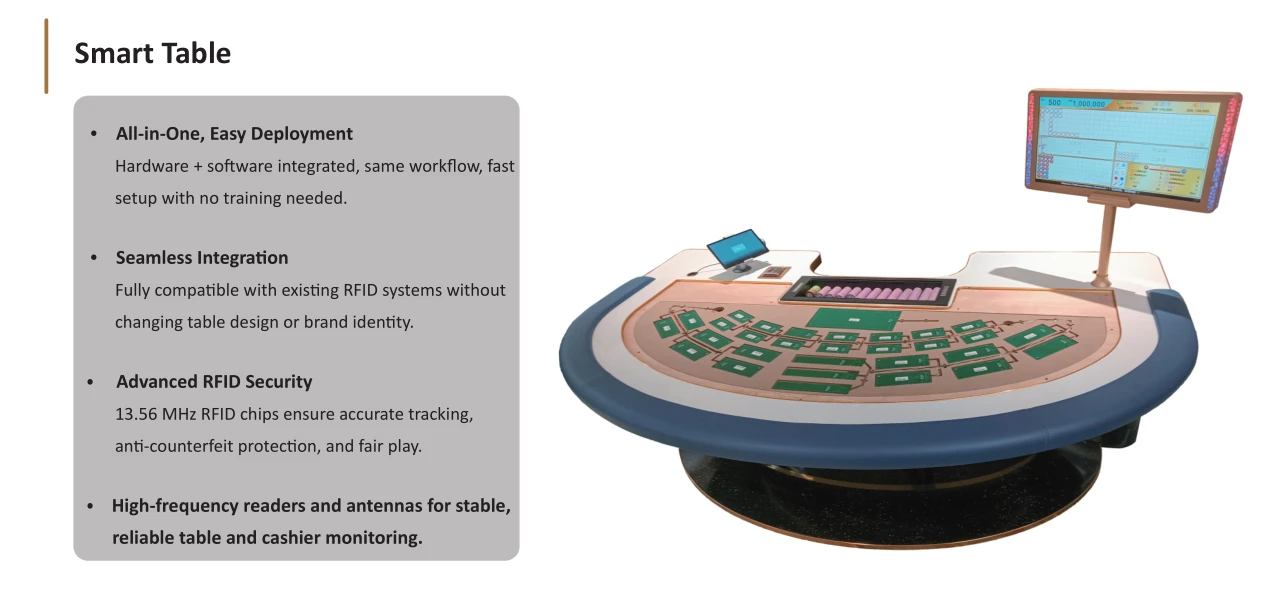
RFID casino table tracking operates through a layered system of hardware and software that integrates seamlessly into existing table game infrastructure.
Embedded RFID Tags in Chips
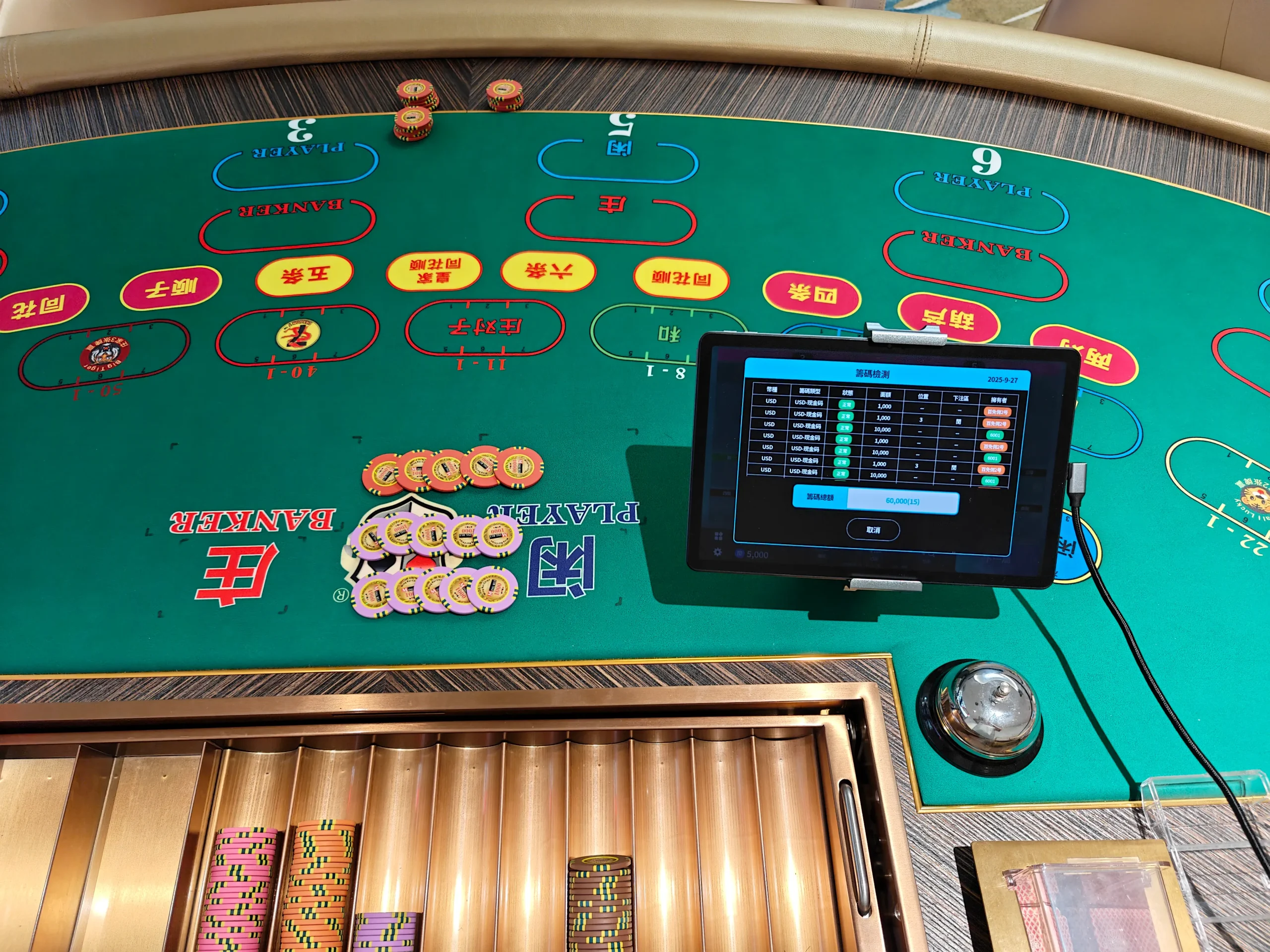
Each casino chip is manufactured with an embedded RFID microchip and antenna. The tag stores a unique identifier that corresponds to the chip’s denomination, color, series, and issuance batch. Modern RFID tags used in casino chips are passive—they do not require a battery and are activated only when they come within the read range of an external antenna. This ensures longevity and reliability across years of daily use.
Table-Embedded Antennas
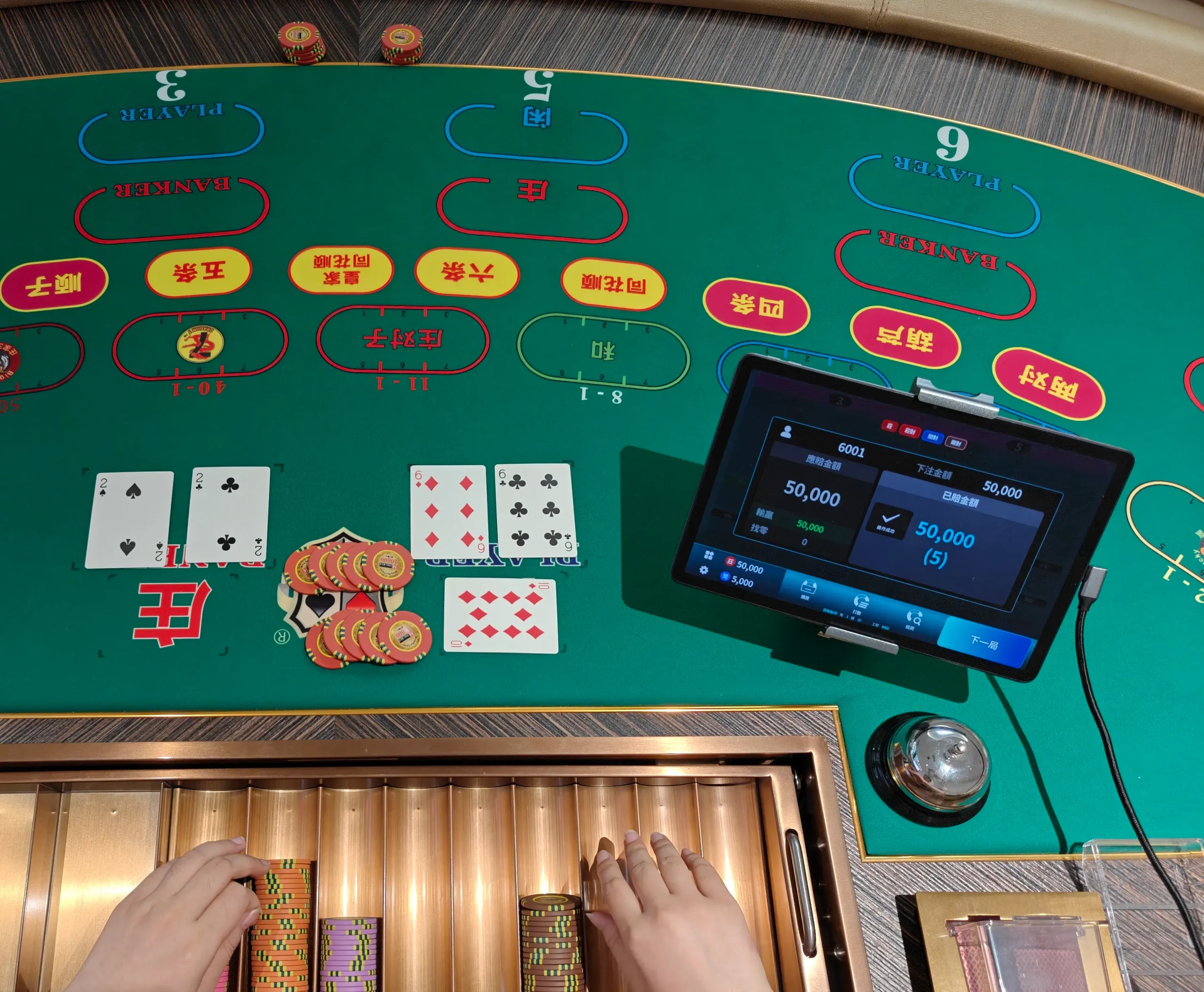
RFID reader antennas are installed beneath the felt surface of gaming tables. These antennas create a read zone that covers the entire playing area, including the dealer’s chip tray, the betting positions, and the cash drop zone. When chips are placed on the table—whether in the tray, on a betting spot, or stacked in front of a player—the antennas detect and identify each chip in real time.
Real-Time Data Processing
The antenna data feeds into a reader unit connected to the casino’s central monitoring system. Every chip movement on every tracked table is logged continuously: chips entering the dealer tray, chips wagered at each position, chips paid out as winnings, and chips removed from the table. This data stream enables live dashboards, automated alerts, and historical analytics without any manual intervention.
Integration with Casino Management Systems
The RFID tracking layer integrates with existing casino management platforms, player tracking systems, and accounting databases. This means chip-level data enriches player behavior analytics, table performance metrics, and financial reconciliation workflows—all without requiring operators to maintain separate data silos.
Operational Benefits of Real-Time Chip Monitoring
The transformation from periodic manual tracking to continuous RFID-based monitoring delivers benefits across every dimension of table game operations.
Continuous Float Verification
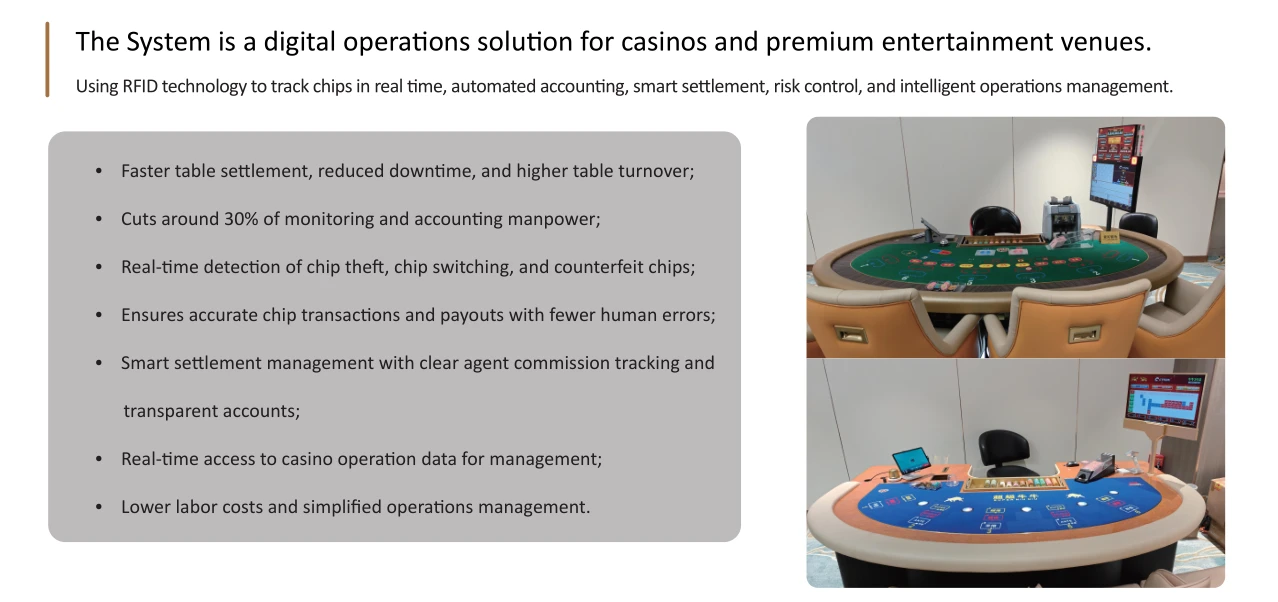
With RFID table tracking, the chip float on every table is verified continuously—not just at shift boundaries. The system knows exactly how many chips of each denomination should be present at any given moment, and any discrepancy triggers an immediate alert. This eliminates the window of vulnerability that manual processes left open and reduces variance investigation from a hours-long exercise to a seconds-level response.
Live Table Performance Analytics
Real-time chip monitoring enables a new category of table performance metrics that were previously impossible to calculate with any accuracy:
– Chip velocity per table: How quickly chips move through a given table, indicating game pace and player engagement levels.
– Denomination distribution trends: Which chip values are most active at specific tables, informing float optimization decisions.
– Hold percentage by position: Actual hold rates calculated from real chip movement data rather than estimated from hand counts.
– Peak activity windows: Precise identification of when each table reaches its highest chip volume, enabling optimal staffing allocation.
These metrics allow operations managers to make data-driven decisions about table layout, float sizing, game mix, and staffing—decisions that directly impact revenue per table and per square foot of gaming floor space.
Enhanced Dealer Accountability
RFID table tracking introduces a layer of objective, automated oversight into dealer operations. The system records every chip transaction tied to a specific dealer and timestamp. This data supports:
– Variance pattern analysis: Identifying dealers whose tables consistently show unusual chip movements, enabling targeted training or investigation.
– Transaction accuracy verification: Confirming that payouts match wager outcomes without requiring a supervisor to physically observe every hand.
– Performance benchmarking: Comparing dealer speed, accuracy, and table hold rates against objective standards derived from real data.
This does not replace human supervision—it augments it. Pit managers and supervisors can focus on customer service and game protection while the RFID system handles the data collection that previously consumed their time.
Rapid Dispute Resolution
Player disputes over chip counts, bet amounts, or payout accuracy are among the most time-consuming incidents on a gaming floor. RFID table tracking resolves many of these disputes instantly. When a player claims they wagered a different amount or received an incorrect payout, the system can retrieve the exact chip transaction log for that table, position, and time window. The data is objective, timestamped, and tamper-resistant—providing an authoritative record that both the player and the operator can trust.
Float Optimization Across the Floor
One of the most impactful operational benefits is the ability to optimize chip float distribution dynamically. Traditional float management relied on experience and rough estimates—placing a certain number of chips on each table based on historical patterns and supervisor judgment. RFID tracking replaces this with data-driven float allocation:
– Tables with high chip velocity receive appropriately sized floats to avoid interruptions for chip fills.
– Tables with low activity receive reduced floats, freeing chip inventory for higher-demand positions.
– Denomination mix is adjusted based on actual usage patterns rather than assumptions.
Optimized float distribution reduces the frequency of chip fills and credits, minimizes the labor cost of float transfers, and ensures that every table is always ready to accept wagers at the level its players demand.

Compliance and Regulatory Advantages
Regulatory bodies across major gaming jurisdictions increasingly expect—or require—operators to demonstrate robust chip accountability. RFID table tracking directly addresses several regulatory priorities:
Audit Trail Integrity
Every chip movement on every tracked table is logged with a timestamp, reader ID, and chip identifier. This creates an unbroken, machine-generated audit trail that satisfies regulatory requirements for transaction documentation far more comprehensively than manual logs.
Variance Reporting Accuracy
Regulators require timely variance reports, and RFID systems generate these automatically. Discrepancies are flagged and documented at the moment they occur, not at the end of a shift when context has faded and evidence has degraded.
Anti-Money Laundering Support
RFID chip-level data supports suspicious activity detection by tracking chip movements that deviate from normal patterns—such as unusually large chip accumulations at a single position, rapid movement of high-denomination chips between tables, or chip volume patterns inconsistent with observed wagering behavior.
Regulatory Examination Readiness
When regulators conduct examinations, RFID-enabled operators can produce detailed, system-generated reports covering any table, any time period, and any chip denomination within minutes. This contrasts sharply with the labor-intensive, error-prone manual report compilation that examiners often encounter.
Implementation Considerations
Adopting RFID table tracking requires thoughtful planning across several dimensions.
Hardware Selection
Casino operators must select RFID tags and readers that meet the specific demands of gaming environments—durability under constant handling, reliable read performance through stacked chips, and compatibility with existing chip designs. Working with a leading provider of casino-grade RFID solutions ensures that hardware specifications align with operational requirements.
Table Retrofit vs. New Build
RFID antennas can be retrofitted into existing tables or integrated during new table construction. Retrofitting is typically more cost-effective for properties with established table inventory, while new builds allow for optimized antenna placement and reduced installation complexity.
Data Integration Architecture
The RFID data layer must be integrated with the property’s casino management system, player tracking platform, and financial accounting infrastructure. This integration should be designed with scalability in mind—adding new tables, new denominations, or new data consumers should not require architectural rework.
Staff Training and Change Management
Transitioning from manual tracking to RFID-based monitoring changes daily workflows for pit managers, supervisors, dealers, and accounting staff. Effective implementation includes structured training programs that help staff understand what the system does, how to interpret its outputs, and how to incorporate real-time data into their decision-making processes.
Privacy and Data Governance
RFID tracking generates granular data about player behavior and chip movement. Operators must establish clear data governance policies governing data retention, access controls, and usage boundaries—both to protect player privacy and to maintain regulatory compliance.
The Future of RFID Table Tracking
The trajectory of RFID technology in casino operations points toward several emerging capabilities:
– AI-driven anomaly detection: Machine learning models trained on chip movement data will identify suspicious patterns faster and more accurately than threshold-based alerts.
– Cross-table player tracking: Linking chip movements across multiple tables to build comprehensive player behavior profiles without requiring manual carding.
– Predictive float management: Algorithms that anticipate float requirements based on historical patterns, seasonal trends, and real-time floor activity.
– Integrated security ecosystems: Combining RFID chip data with surveillance video analytics, access control logs, and employee tracking to create unified security intelligence platforms.
Operators who establish RFID infrastructure today are building the foundation for these future capabilities. The data pipeline that real-time chip monitoring creates is the same pipeline that next-generation analytics and AI systems will consume.
Conclusion
RFID casino table tracking has moved beyond pilot programs and early adopters into mainstream operational technology. The benefits—continuous float verification, live table analytics, enhanced dealer accountability, rapid dispute resolution, optimized float distribution, and regulatory compliance readiness—are compelling and quantifiable. For operators evaluating their next technology investment, RFID table tracking represents not merely an upgrade to existing processes but a fundamental transformation of how table game operations are monitored, managed, and optimized.
FAQ
How does RFID table tracking differ from manual chip counting?
Manual chip counting occurs at discrete intervals—typically at shift changes—and depends on human observation and transcription. RFID table tracking operates continuously, detecting and logging every chip on the table in real time without manual intervention. This eliminates counting errors, reduces variance detection time from hours to seconds, and provides live data for operational decision-making.
Can RFID read through stacked chips on a table?
Modern casino-grade RFID readers are designed to read through stacks of chips. The antennas embedded in table surfaces detect individual chip tags even when chips are stacked in the dealer tray or in player positions. Leading providers have refined antenna geometry and read algorithms specifically to handle the stacking patterns common in live table game environments Macaumr Gaming Technology.
Does RFID table tracking slow down game pace?
No. RFID tags in chips are passive and require no action from dealers or players. The antennas beneath the table felt read chips silently and continuously without any change to game procedures, dealer routines, or player experience. The tracking layer operates invisibly alongside normal game play.
What happens if a chip’s RFID tag stops working?
RFID systems include exception-handling protocols for unreadable chips. When a chip fails to register, the system flags the anomaly and prompts a manual verification step. Most leading systems also support periodic tag health checks, allowing operators to identify and replace degraded chips before they cause tracking gaps.
Is RFID table tracking required by gaming regulators?
Regulatory requirements vary by jurisdiction. Some regulators mandate chip tracking technology for specific operations or chip denominations, while others encourage adoption through compliance incentives. Regardless of mandate status, RFID tracking significantly simplifies regulatory reporting and examination preparation, making it a strategic investment even in jurisdictions where it is not yet required.
How long does it take to implement RFID table tracking across a casino floor?
Implementation timelines depend on the scope of deployment, the condition of existing tables, and the complexity of data integration. A phased rollout—starting with high-value tables and expanding progressively—is typically completed over several months. Leading providers offer implementation support that includes hardware installation, software configuration, integration testing, and staff training.
Can RFID table tracking integrate with existing casino management systems?
Yes. RFID tracking platforms are designed with open integration architectures that connect to standard casino management systems, player tracking databases, and accounting platforms. The integration delivers chip-level data to existing workflows without requiring operators to replace their core operational software.