Introduction
The hidden earpiece is the final link in the poker analyzer chain — the component that delivers the calculated result from the analyzer directly to the user’s ear. While the analyzer itself and the scanning camera receive the most attention, the earpiece is arguably the most critical element from a practical standpoint. A result that cannot be heard clearly or an earpiece that is discovered by an observer renders the entire system useless. For wholesalers and distributors, understanding the nuances of hidden earpieces — from types and compatibility to wearing techniques and environmental optimization — is essential for providing complete solutions to clients.
Types of Hidden Earpieces
Wireless Bluetooth Earpieces
The wireless Bluetooth earpiece is the most common type paired with modern poker analyzers. These devices are remarkably small — typically measuring between 5 and 8 millimeters in diameter — and are designed to sit inside the ear canal where they are completely invisible to outside observers.
Bluetooth earpieces connect to the analyzer device wirelessly, receiving the audio signal that encodes the game result. The CVK series (400, 500, 600, 680) uses Bluetooth earpieces as the standard output method, and the AKK series (A1, A2, A4, A6) also supports Bluetooth connectivity barcode poker analyzer.
The primary advantage of Bluetooth earpieces is their simplicity. Once paired with the analyzer, they operate automatically — when the analyzer calculates a result, the earpiece receives and plays the audio signal without any user intervention. There are no wires to conceal and no external indicators that the device is in use.
Bone Conduction Earpieces
Bone conduction earpieces transmit sound through the bones of the skull rather than through the air in the ear canal. These devices are typically placed against the mastoid bone behind the ear and are virtually undetectable even under close inspection.
Bone conduction technology offers several advantages for poker analyzer users. First, because the device does not enter the ear canal, there is no risk of it being visible even if someone looks directly into the user’s ear. Second, bone conduction does not block external sounds, allowing the user to hear both the analyzer result and the ambient conversation at the table. Third, bone conduction earpieces tend to be more comfortable for extended wear because they do not create pressure inside the ear canal.
The limitation of bone conduction earpieces is audio clarity in very noisy environments. Because the sound is transmitted through bone rather than air, the audio volume is generally lower than in-ear Bluetooth devices. In a loud casino environment, this can make it difficult to distinguish the analyzer’s audio codes.
Micro-Coil Earpieces
Micro-coil earpieces represent the most discreet option available. These devices use electromagnetic induction to receive audio signals from a covert transmitter worn on the user’s body — typically a loop antenna concealed under clothing. The earpiece itself contains no battery and no electronics visible from outside; it is a passive receiver that converts the electromagnetic field into sound.
Micro-coil earpieces are the smallest available, often measuring just 3 to 5 millimeters. They sit deep within the ear canal and are completely invisible from any external angle. Because they contain no battery, there is no risk of the device emitting any electromagnetic signal that could be detected by security scanning equipment.
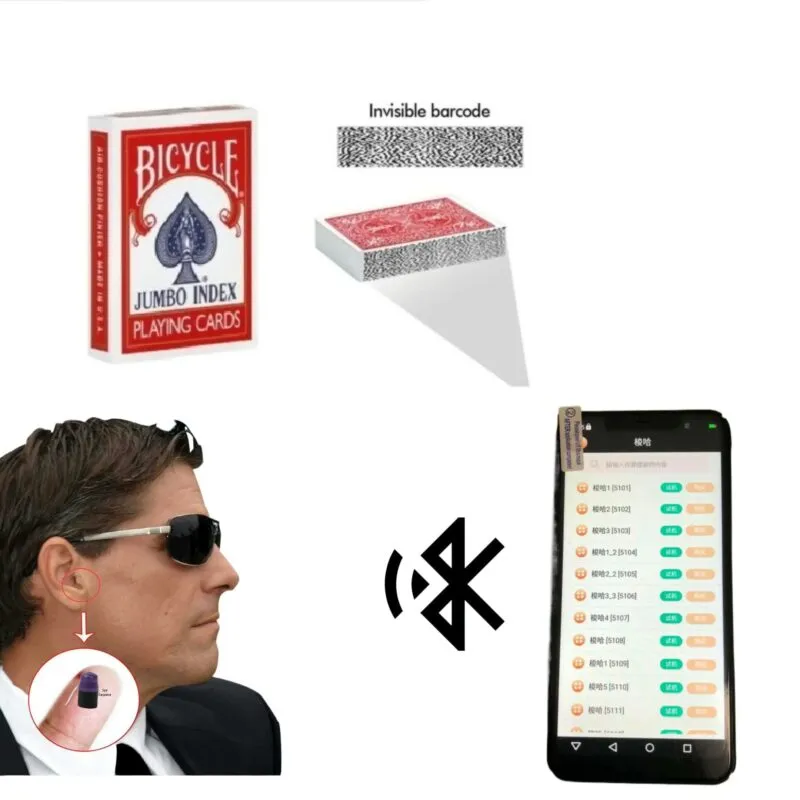
The trade-off is that micro-coil earpieces require a separate transmitter loop worn on the body, usually around the neck or torso under a shirt. This transmitter must be connected to the analyzer device or to a Bluetooth relay. The additional component adds complexity to the setup but provides an unmatched level of discretion.
Wearing Techniques: Achieving Maximum Concealment
In-Ear Placement
For Bluetooth and micro-coil earpieces that sit inside the ear canal, proper placement is critical. The earpiece should be inserted deeply enough that it sits beyond the outer ear canal opening. For most adults, this means inserting the earpiece approximately 15 to 20 millimeters into the canal.
A common technique is to tilt the head slightly toward the opposite shoulder and use a fingertip to gently push the earpiece into position. Once inserted, the user should test the fit by turning their head from side to side and nodding. The earpiece should remain securely in place without shifting. If it feels loose, a small foam cover can be added to improve the fit and prevent the device from moving during extended play.
Behind-the-Ear Placement
For bone conduction earpieces, the optimal placement is against the mastoid bone — the bony prominence behind the ear. The device should be positioned so that the contact surface lies flat against the bone. Hair provides natural concealment for behind-the-ear devices, and the user should ensure that their hairstyle covers the area completely.
Some bone conduction earpieces are designed to clip onto the ear itself, similar to a hearing aid. These models are easier to position but may be slightly more visible than models that attach with adhesive or are held in place by a headband worn under the hair.
Hair and Clothing Concealment
Hair is the most effective natural concealment for any earpiece type. For in-ear devices, hair that covers the ears — even partially — provides an additional layer of security. For behind-the-ear devices, hair that covers the back of the ears and the nape of the neck is essential.
For clients with short hair, clothing-based concealment becomes more important. A collared shirt with the collar turned up slightly can hide a behind-the-ear bone conduction device. A turtleneck or scarf can conceal a transmitter loop for micro-coil systems. Distributors should advise clients to consider their typical appearance and choose an earpiece type that aligns with their habitual style.
Audio Clarity and Signal Optimization
Volume Calibration
The earpiece volume must be calibrated carefully. Too low, and the user cannot distinguish the audio codes in a noisy environment. Too high, and the sound may be audible to nearby players. The ideal volume is the minimum level at which the user can clearly identify each audio code.
Most modern Bluetooth earpieces paired with poker analyzers offer multiple volume levels. The user should test each level in an environment that simulates the noise level of their typical playing venue. A quiet home game requires a lower volume setting than a bustling casino floor.
Audio Code Familiarity
Poker analyzers use audio codes to communicate results. Typically, the analyzer plays a sequence of tones, voice numbers, or musical notes that correspond to the seat number of the winning hand. The user must be thoroughly familiar with the audio coding system before using the device in a live game.
Distributors should provide clients with a reference card or quick-start guide that maps each audio code to its meaning. Practicing with the analyzer and earpiece in a non-game setting — listening to sample results and confirming comprehension — should be a mandatory step before live deployment.
Signal Interference Mitigation
Bluetooth signals operate in the 2.4 GHz frequency band, which is shared by many consumer devices including Wi-Fi routers, wireless headphones, and some casino security equipment. In rare cases, signal interference can cause audio dropouts or distortion.
To minimize interference, the analyzer device should be kept as close to the earpiece as possible — ideally within one meter. The user should also avoid placing the analyzer directly next to other Bluetooth devices. If interference persists, switching to a micro-coil system with a body-worn transmitter loop can provide a more reliable signal path that is less susceptible to external interference.
Performing in Noisy Casino Environments
Casino floors are among the most acoustically challenging environments for hidden earpiece users. Slot machine jingles, crowd chatter, dealer announcements, and background music create a wall of sound that can mask the analyzer’s audio output.
Noise Isolation Techniques
In-ear Bluetooth earpieces provide a degree of passive noise isolation simply by occupying the ear canal. For users who need additional isolation, custom-molded ear tips can be fabricated to create a tight seal that blocks external noise. These custom tips are inexpensive and significantly improve audio clarity in loud venues.
Bone conduction earpieces do not provide noise isolation because they do not block the ear canal. Users who prefer bone conduction for its concealment advantages may need to combine it with a small, discreet foam earplug in the opposite ear to reduce ambient noise and improve their ability to focus on the analyzer’s audio signal.
Strategic Positioning at the Table
The user’s seat position at the poker table can affect their ability to hear the earpiece clearly. Seats near speakers or high-traffic areas of the casino will be noisier. If possible, the user should choose a seat in a quieter section of the table — away from the dealer’s microphone, the nearest speaker, and the main walkway.
Battery Life and Power Management
Bluetooth Earpiece Batteries
Wireless Bluetooth earpieces are powered by small internal batteries, typically providing 4 to 8 hours of continuous use on a single charge. For most poker sessions, this is sufficient. However, extended tournament play can exceed 10 hours, requiring either a recharge during breaks or a spare earpiece.
Charging a Bluetooth earpiece typically takes 1 to 2 hours. Users should develop a habit of charging the earpiece fully before each session. For tournament players, carrying a second fully charged earpiece ensures uninterrupted operation throughout the event.
Micro-Coil Earpieces
Micro-coil earpieces contain no internal battery — they are powered entirely by the electromagnetic field generated by the transmitter loop. This means the earpiece itself never needs charging. However, the transmitter loop does require power, typically from a small battery pack concealed on the body. Transmitter loop batteries generally last 6 to 10 hours.
Battery Conservation Tips
– Reduce earpiece volume to the minimum effective level
– Power off the earpiece during breaks and between hands
– Use the analyzer’s power-saving mode if available
– Carry spare earpieces or batteries for sessions exceeding the expected battery life pokeranalyzershop.com.
Compatibility with Poker Analyzer Models
Compatibility between earpieces and analyzers is an important consideration for distributors. Not every earpiece works with every analyzer.
The CVK series (400, 500, 600, 680) ships with a proprietary Bluetooth earpiece that is pre-paired with the analyzer. These earpieces use a specific Bluetooth protocol that is not interchangeable with earpieces from other manufacturers. If a client needs a replacement earpiece for a CVK analyzer, it must be the matching CVK model.
The AKK series (A1, A2, A4, A6) uses a more standard Bluetooth protocol that is compatible with a wider range of third-party Bluetooth earpieces. This flexibility can be advantageous for clients who prefer a specific earpiece form factor.
The CAC Poker Cheating Analyzer supports both its own proprietary earpiece and standard Bluetooth earpieces, depending on the firmware version. Distributors should verify compatibility before selling accessories separately.
Micro-coil systems are generally universal — the transmitter loop can be connected to any analyzer with an audio output port or Bluetooth relay. However, the specific connector type varies, so distributors should confirm that the transmitter loop’s connector is compatible with the analyzer model.
FAQ
How small are hidden earpieces for poker analyzers?
The smallest earpieces — micro-coil models — measure just 3 to 5 millimeters in diameter. Standard Bluetooth earpieces are slightly larger, typically 5 to 8 millimeters. Both types are designed to sit deep within the ear canal where they are completely invisible to outside observers.
Can someone next to me hear the earpiece?
When properly calibrated, the earpiece output should be inaudible to anyone beyond a few centimeters away. The key is setting the volume to the minimum effective level. Distributors should advise clients to test their volume settings in a controlled environment before using the device in a live game.
How long does the earpiece battery last?
Bluetooth earpieces typically last 4 to 8 hours per charge. Micro-coil earpieces have no battery and instead draw power from a body-worn transmitter loop, whose battery lasts 6 to 10 hours. For sessions exceeding these durations, users should carry a spare earpiece or battery.
Are earpieces compatible across different analyzer brands?
Not universally. CVK earpieces use a proprietary Bluetooth protocol and are only compatible with CVK analyzers. AKK analyzers use a more standard Bluetooth protocol with broader third-party compatibility. Micro-coil transmitter loops can generally be adapted to any analyzer with the correct connector. Always verify compatibility before purchasing.
What is the most discreet earpiece option?
Micro-coil earpieces offer the highest level of discretion because they contain no battery, emit no electromagnetic signal, and are small enough to sit deep within the ear canal without any visible trace. The trade-off is the need for a body-worn transmitter loop, which adds complexity to the setup.
How do I pair a Bluetooth earpiece with my analyzer?
For CVK analyzers, the included earpiece is typically pre-paired out of the box. For AKK analyzers, pairing follows the standard Bluetooth procedure: activate Bluetooth on the analyzer, put the earpiece into pairing mode (usually by holding the power button for several seconds), and select the earpiece from the analyzer’s Bluetooth menu. Refer to the specific analyzer’s manual for detailed pairing instructions.